Beat the Freeze: 7 Property Jobs a One Sixteen ATV Dump Trailer Can Finish Before Winter

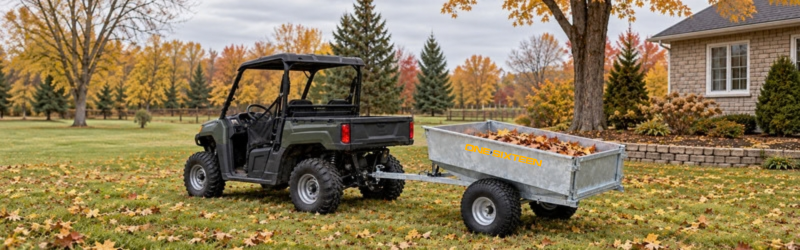
 Beat the Freeze: 7 Property Jobs a One Sixteen ATV Dump Trailer Can Finish Before WinterFall always seems to move faster when there is a long list of outdoor jobs to finish. From stacking firewood and repairing fences to clearing gardens and improving drainage, farmers, acreage owners, landscapers, and homeowners have plenty to tackle before freezing temperatures and snow make property maintenance more challenging.A One Sixteen ATV dump trailer. Paired with the right ATV or UTV, these compact trailers can move materials, supplies, and debris across fields, trails, yards, and other areas of your property. Here are seven practical jobs worth checking off your list before winter arrives.

What Jobs Can You Do With an ATV Dump Trailer?

ATV dump trailer such as hauling firewood, clearing garden debris, transporting fencing supplies, moving feed, carrying gravel for drainage repairs, and cleaning up branches. Its compact design makes it useful for reaching fields, trails, gardens, and other areas where larger vehicles may be inconvenient. With a dump function for easier unloading, it can also reduce the manual work involved in everyday hauling.

1. Stock Up on Firewood Before the Snow Arrives

Getting firewood cut, moved, and stacked before winter can save plenty of work once snow and freezing temperatures arrive. A One Sixteen ATV dump trailer can help transport firewood from wooded sections of your property to a woodshed, barn, garage, or other storage area.An compact utility trailers when the woodpile is located along narrow trails or in areas that are inconvenient to reach with a pickup truck. Instead of carrying logs by hand or making countless small trips, you can move more material efficiently across the property.When hauling firewood, remember to:
  • Distribute the wood evenly throughout the trailer
  • Keep heavier pieces low and secure
  • payload rating
  • Make smaller trips rather than exceeding weight limits
Firewood is dense, so a trailer can reach its weight capacity before it looks completely full. Planning loads carefully helps protect your equipment while keeping the job moving.Finishing this task in the fall means you can head into the colder months with dry, accessible firewood already where you need it.

2. Finish Fence Repairs Around Fields and Acreages

Fall is a practical time to walk your fence lines and take care of repairs before snow covers damaged posts, loose boards, or other problem areas. For farmers and acreage owners, getting fences in good condition before winter can also make managing livestock and maintaining property boundaries easier during the colder months.A One Sixteen ATV dump trailer gives you a convenient way to carry repair materials directly to different sections of the property. Instead of repeatedly walking back to the barn or workshop, you can load the supplies you need and bring them along the fence line.Depending on the project, your trailer can carry:
  • Replacement fence posts and boards
  • Fencing wire and fasteners
  • Hand and power tools
  • Gravel or soil for post areas
  • Other repair supplies
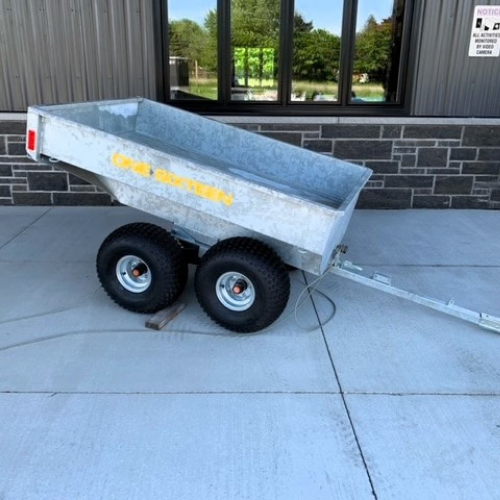
The compact combination of an ATV or UTV and dump trailer can be especially useful along narrow fence lines or across fields where taking a larger vehicle may be inconvenient.Completing these repairs before the ground freezes also makes digging, levelling, and replacing posts considerably easier. It is one more fall job that can prevent a small maintenance issue from becoming a bigger project next spring.Galvanized utility trailer with two axles and a tipped bed, attached to a tow bar, parked on a concrete pad in front of a building.

3. Clear Gardens, Leaves, and Fall Yard Debris

Once gardens stop producing and leaves begin covering the property, fall cleanup can quickly turn into a much bigger job than expected. A One Sixteen ATV dump trailer can make it easier to collect debris from different areas and transport it to a compost pile or designated disposal location.Depending on your property, you may need to move:
  • Fallen leaves
  • Dead garden plants
  • Weeds and old vegetation
  • Small branches and brush
  • Old mulch
  • General landscaping debris
For acreage owners and landscapers working across larger properties, an ATV or UTV can help reach gardens, tree lines, and landscaped areas without relying on a full-size truck for every load.The dump function. Instead of unloading loose leaves, plants, and other debris piece by piece, the trailer can make emptying the load considerably more efficient.Completing a thorough cleanup before winter also gives you a head start on spring maintenance. With old vegetation and debris already removed, gardens, lawns, and landscaped areas can be easier to assess and prepare once warmer weather returns.

4. Repair Drainage Areas Before the Ground Freezes

Poor drainage can become much harder to address once the ground freezes. Fall is a good opportunity to inspect laneways, low spots, ditches, and other areas where water tends to collect, then complete smaller repairs before winter weather arrives.A One Sixteen ATV dump trailer can help transport materials to drainage areas that may be inconvenient to reach with a larger truck. Depending on the project, you might use it to move:
  • Gravel or crushed stone
  • Soil and fill
  • Drainage pipe
  • Landscaping stone
  • Tools and repair supplies
This can be particularly helpful on acreages, farms, and larger rural properties where drainage issues may be located well away from the main driveway.Keep in mind that gravel, stone, and wet soil become heavy very quickly. A trailer may appear to have plenty of room remaining while already approaching its payload limit. service department and distribute materials evenly.Taking care of drainage problems now can help prepare your property for winter precipitation and the eventual spring thaw, while the dump function makes placing loose material considerably more convenient.

5. Move Feed and Farm Supplies Before Winter Weather

Winter chores become much easier when feed, bedding, and other essential supplies are already where you need them. Before snow and ice make travelling around the property more difficult, a One Sixteen ATV dump trailer can help you move supplies between storage buildings, barns, pastures, and animal shelters.Depending on your operation, you can use the trailer to transport:
  • Bagged feed
  • Hay or bedding
  • Buckets and containers
  • Fencing supplies
  • Tools and equipment
  • Other everyday farm essentials
For farmers and acreage owners, pairing a compact trailer with an ATV or UTV can reduce the amount of manual carrying required throughout a large property. It can also provide access to areas where manoeuvring a pickup truck or larger piece of equipment may be inconvenient.Fall is also a good time to organize supplies based on where they will be needed throughout winter. Moving frequently used items closer to barns, shelters, or feeding areas now can save valuable time on cold mornings.As with any load, check the trailer's payload capacity and your ATV or UTV's towing limits before heading out. A little preparation before winter can make everyday property and livestock chores considerably more efficient.

6. Clean Up Trails and Remove Fallen Branches

Fall winds and seasonal tree maintenance can leave branches, brush, and other debris scattered across trails and wooded areas. Clearing these routes before snow arrives can help keep important parts of your property accessible throughout winter.A One Sixteen ATV dump trailer can be particularly useful for trail cleanup because an ATV or UTV can travel through areas that may be difficult to access with a larger truck. You can work your way along the trail, collecting debris as you go instead of carrying everything back by hand.The trailer can help transport:
  • Fallen branches and small limbs
  • Brush and cut vegetation
  • Trail maintenance tools
  • Gravel or fill for minor repairs
  • Supplies for maintaining gates or access points
Once loaded, branches and other organic debris can be taken to a designated disposal or processing area elsewhere on the property.Clearing trails now can also make winter property inspections and maintenance easier. For farmers, acreage owners, and homeowners with larger rural properties, keeping access routes clear means fewer obstacles to deal with once those same trails are covered by snow.

7. Move Gravel, Soil, and Materials for Final Fall Projects

There always seems to be one more property project to finish before winter. Whether you are repairing a laneway, refreshing a garden bed, or filling low spots around the property, a One Sixteen ATV dump trailer can help move materials directly to where the work is happening.Depending on the project, you can haul:
  • Gravel or crushed stone
  • Topsoil and fill
  • Mulch
  • Landscaping stone
  • Sand
  • Small project materials
The dump function can be especially helpful when working with loose materials. Rather than unloading gravel, soil, or mulch manually, you can position the trailer near the work area and unload the material where it is needed.An ATV or UTV also provides greater flexibility when working around gardens, trails, fields, and other areas that may be awkward to reach with a larger vehicle.Remember that volume does not always indicate weight. A trailer full of mulch weighs considerably less than the same volume of gravel or wet soil. Always consider the material being transported, check your payload limits, and make additional trips when necessary.Finishing these smaller projects now can leave your property better prepared for winter and shorten next spring's maintenance list.

Payload Matters: Know What Your Trailer Can Safely Carry

An ATV dump trailer may be compact, but understanding payload is still essential. Materials such as gravel, soil, firewood, and feed can add significant weight quickly, so loads should always be planned around the limits of both the trailer and the vehicle towing it.Before starting a property maintenance job, consider:
  • The trailer’s maximum payload capacity
  • Your ATV or UTV’s rated towing capacity
  • The weight of the material being transported
  • How the load is distributed inside the trailer
  • The terrain and conditions you will be travelling over
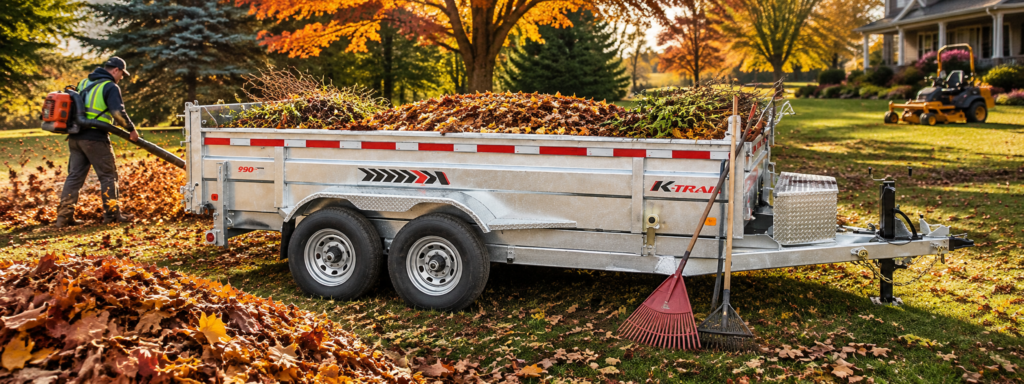
Dense materials deserve particular attention. Gravel or wet soil, for example, can reach the trailer’s weight limit long before the box appears full. Lighter materials such as leaves and garden debris may fill the available space without creating the same weight concerns.Always check the manufacturer specifications for your specific trailer and tow vehicle rather than estimating how much you can carry. Staying within the appropriate limits helps you use your One Sixteen ATV dump trailer effectively while protecting your equipment during those final fall property projects.

Get Your Property Winter-Ready With a One Sixteen ATV Dump Trailer

There is a lot to accomplish before winter settles in, but the right equipment can make those final property jobs easier to manage. A One Sixteen ATV dump trailer can help you move firewood, feed, fencing supplies, yard debris, gravel, and other materials around your property without relying on a larger vehicle for every task.Whether you manage a farm, acreage, landscaping business, or large residential property, choosing a trailer that works with your ATV or UTV is important. The right setup can help you tackle seasonal hauling efficiently now while giving you a useful tool for property maintenance throughout the year.Wondering, “Will it work with my ATV or UTV?” McFarlane Trailer Sales. We can help you explore One Sixteen ATV dump trailer options and find a setup suited to your vehicle and hauling needs. Contact us today.

How Many Fall Cleanups Fit in One Load? A K-Trail Dump-Trailer Capacity Planner for Landscaping Crews

 A K-Trail Dump-Trailer Capacity Planner for Landscaping CrewsFall cleanup season can turn a productive landscaping route into a series of dump-site runs. Leaves and brush fill a trailer quickly, and choosing the right capacity can mean the difference between finishing several properties in one load and losing valuable time unloading halfway through the day.A K-Trail dump trailer for landscaping can make seasonal cleanup more efficient, but capacity isn’t just about box size. Leaves, brush, soil, mulch, and gravel all load differently. This guide will help you estimate how many fall cleanups your trailer can handle while balancing volume, payload, and practical hauling needs.

What Size Dump Trailer Do I Need for Fall Cleanups?

For most fall cleanups, choose a dump trailer based on the volume of leaves and brush you typically collect, as well as the trailer's available payload. Lightweight leaves usually fill the trailer by volume first, while wet yard waste, soil, and gravel can reach payload limits much sooner. The right size depends on your properties, materials, tow vehicle, and daily workload.

Start With Cubic Yards: How Much Space Does a Fall Cleanup Use?

When hauling leaves and yard waste, cubic yards tell you how much material can physically fit inside the trailer. This is especially important during fall cleanups because dry leaves are relatively light but take up a lot of space. A trailer can look completely full while still being well below its maximum payload.To estimate how many cleanups you can fit in one load, start by estimating how many cubic yards of debris an average property produces. For example, if a typical cleanup generates about 3 cubic yards of leaves and brush and your trailer provides 12 cubic yards of usable space, you could theoretically fit about four similar cleanups before unloading.Keep in mind that yard waste rarely packs perfectly. Loose leaves settle, while branches and hedge trimmings can leave large pockets of unused space. Wet leaves also weigh considerably more than dry ones. Treat your calculation as a planning estimate and leave some extra capacity rather than assuming every cubic yard of trailer space will be usable.A simple formula can help when planning your route:Approximate cleanups per load = usable trailer volume ÷ estimated cubic yards of debris per cleanupTracking the amount of debris collected from your regular properties can make these estimates more accurate over time. For landscaping crews with recurring routes, this can help determine when to schedule dump runs and which trailer capacity best matches a typical workday.

Leaves vs. Brush: Why the Same Trailer Can Hold Very Different Loads

Not all fall debris uses trailer capacity the same way. A dump trailer for leaves and yard waste may fill to the top with dry leaves while remaining well below its payload limit. Add wet leaves, grass clippings, or heavier debris, and weight can become a concern much sooner.The type and condition of the material can make a significant difference:
  • Dry leaves: Lightweight but bulky, so available space is usually the main limitation.
  • Wet leaves: Heavier and more compact than dry leaves, making payload more important after rainy weather.
  • Brush and branches: Relatively light for their size, but irregular shapes can create empty pockets and use trailer space inefficiently.
  • Hedge trimmings: Often compact more easily than branches, but can still consume considerable volume on larger properties.
  • Mixed yard waste: A combination of leaves, branches, grass, and other debris can make both volume and weight harder to estimate.
Crews can make better use of available capacity by loading material evenly and breaking down bulky brush when practical. However, fitting more into the box should never come at the expense of safe loading. Stay within the trailer's rated payload, distribute the load properly, and secure loose yard waste before travelling.

Fall Cleanup Load-Planning Table: Leaves, Brush, Soil, Mulch and Gravel

Volume is only half of the equation when planning a dump trailer load. Material density can vary considerably, especially when moisture is involved. The estimates below can help landscaping crews compare common materials and determine whether trailer space or payload is more likely to become the limiting factor.
MaterialApprox. Weight per Cubic YardRelative WeightUsually Limited ByPlanning Tip
Dry leaves100 to 300 lbLightVolumeExpect the trailer to fill before reaching its payload limit
Wet leaves300 to 600+ lbModerateVolume and payloadLeave additional payload capacity after rain
Brush and branches150 to 500 lbLight to moderateVolumeBreak down bulky branches to reduce empty space
Mulch400 to 800 lbModerateVolume and payloadEstimate cubic yards before loading
Soil1,800 to 2,700 lbHeavyPayloadA few cubic yards can add substantial weight
Gravel2,400 to 3,000+ lbVery heavyPayloadCalculate weight carefully before filling the trailer
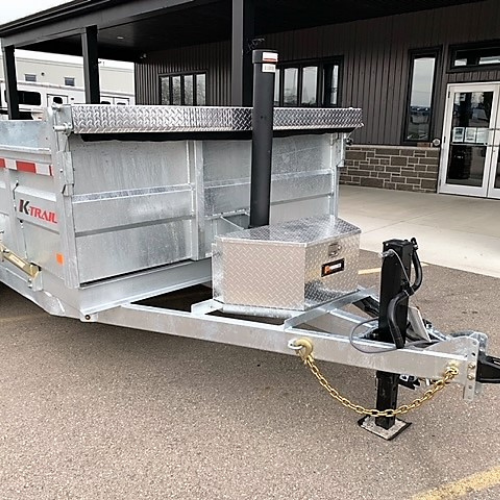
These figures are general planning estimates. Actual weight can vary based on moisture, compaction, material type, and other conditions. A simple calculation can provide a rough load estimate:Estimated load weight = cubic yards of material × estimated weight per cubic yardFor example, 3 cubic yards of soil at an estimated 2,000 pounds per cubic yard would weigh about 6,000 pounds. Before loading, always check the specific trailer's GVWR, empty weight, available payload, axle ratings, and tire ratings, along with the tow vehicle and hitch limits. Never use estimated material weights as a substitute for the manufacturer's specifications or an actual measured load weight.Silver K-Trail dump trailer with a diamond-plate toolbox and a black hoist/post at the front, parked on a lot in front of a building.

How Many Fall Cleanups Can You Actually Fit in One Load?

Once you know your trailer's usable volume and the approximate amount of debris each property produces, you can estimate how many stops will fit into one load. For leaf-heavy cleanups, volume will often determine when it is time to unload.Consider a landscaping crew using a trailer with about 12 cubic yards of usable space:
  • Small cleanup: At 1 to 2 cubic yards of debris per property, roughly 6 to 12 cleanups could fit based on volume alone.
  • Average cleanup: At around 3 cubic yards per property, approximately four cleanups could fit in one load.
  • Large cleanup: At 5 to 6 cubic yards per property, the trailer may hold only two cleanups before a dump run is needed.
  • Mixed-material cleanup: If the load includes wet leaves, soil, sod, or other dense materials, payload may become the limiting factor before the available space is used.
These numbers are planning examples rather than guaranteed load counts. Leaves can settle during transport, branches create empty pockets, and wet material can add significant weight.For landscaping crews, the goal is not necessarily to fit the maximum possible amount into every load. A better approach is to leave a reasonable capacity buffer and plan dump runs around the properties on your route. This helps keep loads within the trailer's ratings while reducing unnecessary trips to the disposal site.

When a Larger K-Trail Dump Trailer Can Reduce Dump Runs

For landscaping and property-maintenance crews, every trip to the disposal site takes time away from the next job. If your trailer regularly fills with leaves and brush after only one or two properties, moving to a larger K-Trail dump trailer for landscaping could help your crew complete more stops between dump runs.Fewer dump runs can provide several practical benefits:
  • More productive hours: Crews can spend more of the workday completing cleanups instead of travelling to and from disposal sites.
  • Lower travel costs: Fewer trips can help reduce fuel use and unnecessary mileage on the tow vehicle.
  • Better route planning: Additional capacity makes it easier to group several nearby properties before unloading.
  • Less disruption: Crews can move from one customer to the next without stopping halfway through a route to empty the trailer.
  • Greater versatility: A properly selected dump trailer can handle fall leaves and brush while also supporting mulch, soil, and other landscaping work throughout the year.
Bigger is not always better, though. A larger trailer may require a more capable tow vehicle, and it can be harder to maneuver in tight residential driveways or crowded job sites. The best choice is a trailer that provides enough capacity for your typical route while staying within your vehicle's towing limits and the trailer's rated payload.

Don't Confuse Box Capacity With Payload Capacity

A dump trailer may have plenty of room left in the box and still be approaching its safe weight limit. This is why landscapers need to consider both cubic-yard capacity and payload when planning a load.Cubic-yard capacity measures how much space is available in the trailer, while payload refers to how much cargo weight the trailer can carry. Available payload can generally be estimated with this formula:Available payload = GVWR - empty trailer weightFor example, dry leaves may fill the entire box without coming close to the trailer's payload limit. Soil and gravel are very different. These dense materials can reach the payload limit while leaving a significant amount of empty space in the box.Before heading to the next job, crews should consider several ratings and limits:
  • GVWR: The maximum allowable loaded weight of the trailer.
  • Payload capacity: The amount of cargo the trailer is rated to carry.
  • Axle and tire ratings: These help determine how much weight the trailer components can safely support.
  • Tow vehicle capacity: The vehicle must be properly rated for the loaded trailer.
  • Hitch and tongue weight: Proper ratings and weight distribution are important for safe towing.
  • Load distribution: Material should be positioned appropriately rather than concentrated in one area of the trailer.
Always confirm specifications for the exact K-Trail model, tow vehicle, hitch, and equipment being used. When hauling heavy landscaping materials, the trailer looking "not full" does not necessarily mean there is room for more.

Choosing a K-Trail Setup for Landscaping and Property Maintenance

The right K-Trail setup should match more than your busiest week of fall cleanups. Landscaping crews often use the same trailer for brush in the spring, mulch and soil in the summer, and leaves throughout the fall. Choosing a versatile setup can help keep the trailer useful throughout the working season.When comparing K-Trail dump trailers, consider:
  • Box dimensions: Longer or taller boxes can provide additional room for bulky leaves, branches, and yard waste.
  • Payload capacity: Make sure the trailer is suited to the heaviest materials you regularly expect to haul.
  • Side height: Higher sides or compatible extensions can provide useful volume for lightweight, bulky debris.
  • Loading access: Consider how easily crews can load leaves, wheelbarrows, equipment, and other materials.
  • Dump system: A reliable dumping system can make unloading at disposal sites or jobsites faster and more convenient.
  • Tarp options: A suitable tarp system can help contain loose leaves and yard waste during transport.
  • Ramps: If available on the specific model, ramps may be valuable for crews that need to transport landscaping equipment between jobs.
For contractors, the goal is to find a K-Trail dump trailer that works for both high-volume debris and heavier landscaping materials without exceeding its rated limits. Homeowners should apply the same principle on a smaller scale, choosing a trailer that fits their property-maintenance needs and the capabilities of their tow vehicle.

A Quick Pre-Load Checklist for Fall Cleanup Crews

A few minutes of planning before the first property can make the entire cleanup route more efficient. Before loading your dump trailer for leaves and yard waste, consider what you will be hauling, how much space it will require, and how quickly the weight could add up.Use this quick checklist before heading out:
  • Estimate how many cubic yards of debris you expect to collect from the day's properties.
  • Identify the main materials, such as leaves, brush, mulch, soil, or gravel.
  • Account for rain or moisture that could make leaves and other yard waste heavier.
  • Confirm the trailer's available payload, GVWR, axle ratings, and tire ratings.
  • Make sure the tow vehicle and hitch are properly rated for the expected loaded trailer weight.
  • Distribute material appropriately instead of concentrating excessive weight in one area.
  • Secure loose leaves, branches, and other debris before travelling.
  • Plan your disposal stops so the crew can complete as many properties as practical without overloading the trailer.
Making these checks part of your fall routine can help reduce unnecessary dump runs while keeping capacity and payload limits at the centre of your load planning.

Plan the Load Before You Plan the Route

The right dump trailer can make fall cleanup routes faster and easier to manage. Leaves and brush tend to use up trailer volume first, while soil, gravel, and wet yard waste can push payload limits much sooner. Knowing what you haul and how much each property typically produces can help you plan loads with fewer surprises.For landscaping crews, property-maintenance companies, and homeowners, a K-Trail dump trailer can provide useful capacity for fall debris while staying versatile for mulch, soil, brush, and other projects throughout the year. The key is choosing a trailer that matches your workload, materials, and tow vehicle.Ready to find the right setup? Browse the current K-Trail dump trailer inventory at McFarlane Trailer Sales, or contact the team for a payload and capacity consultation. Tell us what you haul, how many properties you typically service, and what you tow with, and we can help you narrow down the K-Trail options that fit your needs.

Start the Landscaping Season Right with a K-Trail Dump Trailer Built for Spring Cleanups

 Start the Landscaping Season Right with a K-Trail Dump Trailer Built for Spring CleanupsYou feel it every year when winter fades. Phones start ringing. Yards need cleanup. Jobs stack up fast. Spring is go-time for landscaping crews across Ontario, and starting the season right matters more than ever. When brush piles grow, soil needs moving, and debris has to go somewhere, having the right equipment keeps your day running smoothly.You start the landscaping season right when your hauling setup works as hard as you do. Dump trailers for landscaping are built to handle the mess, weight, and pace of spring cleanup. A K-Trail dump trailer is designed for real job sites, not light weekend use. At McFarlane Trailers in New Hamburg, Ontario, we help contractors gear up with landscaping trailers in Ontario that can handle early-season demand without slowing you down.In this blog, we walk through what makes spring cleanup tough, how K-Trail models support landscaping work, and what to look for when choosing the right trailers for landscaping. The goal is simple: help you work faster, cleaner, and with fewer headaches this season.

Why Spring Cleanup Is the Busiest Time for Landscaping Crews

Spring cleanup is when landscaping crews feel the most pressure. Yards come out of winter covered in fallen branches, old leaves, and damaged turf. Customers want their outdoor spaces cleaned up fast, and any delay can push your schedule behind before the season really starts.Spring also brings tougher working conditions. The ground is soft and often muddy, which makes moving heavy loads harder. Materials like soil and debris hold extra moisture, adding weight and stress during hauling. Landscaping trailers in Ontario need to handle these conditions without slowing the crew down.When hauling equipment struggles, time is lost on every job. Crews may need extra trips or more manual handling, which adds fatigue and cuts into the day. Dump trailers for landscaping help clear sites quickly so crews can move on to the next property without wasted effort or delays.

How a K-Trail Dump Trailer Supports Spring Cleanup Work

Spring cleanup is not light-duty work. You move brush, soil, mulch, sod, and broken materials every day. A K-Trail dump trailer is built for this kind of routine use, especially when conditions are wet and unpredictable.Instead of shovelling out loads by hand, hydraulic dumping allows quick unloading. This saves energy and reduces strain on crews. Faster unloading means more jobs completed in a day.Key ways this helps your operation include:
  • Less manual labour during unloading
  • Faster turnaround between job sites
  • Cleaner work areas with controlled dumping
For contractors using dump trailers for landscaping, this type of setup keeps work moving even when spring weather slows everything else down.

Efficient Debris Removal Without Extra Handling

Spring cleanup creates more waste than most people expect. Brush piles, old mulch, leaves, and broken yard materials add up quickly. Moving all of it by hand costs time and energy.With the right trailers for landscaping, debris removal becomes faster and more controlled:
  • Brush and Branch Hauling: You load large piles without worrying about hand-unloading later. Hydraulic dumping clears the load in seconds at compost or disposal sites.
  • Leaf and Yard Waste Removal: Wet leaves get heavy fast in spring. Dumping saves your crew from shovelling soggy material.
  • Storm Cleanup Work: Spring winds knock down limbs and debris. A K-Trail dump trailer helps clear sites quickly and safely.
Efficient debris removal helps you keep schedules tight and customers happy early in the season.How a K-Trail Dump Trailer Supports Spring Cleanup Work

Moving Mulch, Soil, and Gravel with Less Effort

Material delivery is a big part of spring landscaping work. Mulch, topsoil, gravel, and sod are heavy, especially when damp. Landscaping trailers in Ontario need to manage bulk loads without slowing crews down.Dump trailers for landscaping simplify material handling:
  • Loads stay contained during transport
  • Dumping places material where it is needed
  • No hand unloading across large areas
This reduces fatigue and speeds up installation. When material movement is easier, crews stay productive throughout the day. A K-Trail dump trailer supports both cleanup and installation tasks without switching equipment.

Equipment Transport Between Job Sites

Spring often brings busy schedules and frequent moves between job sites. Mowers, compact loaders, wheelbarrows, and tools may need to be transported several times a day. Landscaping trailers in Ontario must keep this equipment secure so nothing shifts or gets damaged during travel.Dump-style hauling setups make these moves easier and faster. Wide access helps with loading, while stable designs support safe travel on uneven roads. Quick unloading means crews can get to work right away instead of spending time fixing or repositioning equipment. This kind of flexibility keeps each job running smoothly.

Built for Muddy Job Sites and Soft Ground

Spring thaw creates some of the worst ground conditions of the year. Mud, ruts, and shifting soil can stress equipment fast. A K-Trail dump trailer is designed to handle these conditions without bending, warping, or failing.Features that matter during the spring thaw include:
  • Strong frame construction
  • Stable axle setup for uneven ground
  • Durable finishes that resist moisture
Dump trailers for landscaping must perform in less-than-ideal conditions. When your hauling setup holds steady, crews stay safer and jobs finish on time.

Why Reliability Matters Early in the Season

Early in the season, reliability matters more than anything else. Breakdowns do more than cause repairs. They slow jobs, frustrate clients, and throw off schedules that are hard to fix later. Landscaping trailers in Ontario need to perform right away, especially when spring demand hits all at once.Reliable dump trailers for landscaping help you stay on track when work is piling up. Fewer delays mean crews can work full days without interruption. Strong early performance also helps build momentum, setting the tone for a productive season. Spring is not the time to deal with equipment problems, and starting strong keeps your business moving forward.

How to Choose the Right Dump Trailer for Landscaping

Not every setup fits every landscaping business, especially during the busy spring season. Some crews focus on large cleanups, while others handle smaller residential jobs with tight access. Choosing the right trailers for landscaping starts with understanding how you work day to day and what types of loads you move most often. When your hauling setup matches your real needs, work feels smoother, and jobs finish faster.Before choosing, it helps to think through a few key factors that affect daily performance and long-term reliability.
  • Job Size and Volume: Larger spring cleanup jobs create more debris in less time. A setup with enough capacity reduces the number of trips you need to make to disposal or compost sites. Fewer trips save fuel, time, and wear on your equipment.
  • Material Type: Spring loads are often heavier than they look. Wet soil, mulch, and yard debris add weight quickly, especially after rain or thaw. Strong lifting systems help unload safely and smoothly without straining crews or equipment.
  • Access and Site Conditions: Many landscaping jobs take place in tight residential yards or on soft ground. A stable design helps prevent shifting when loading or unloading in uneven conditions. This matters most during spring, when ground conditions change from site to site.
A K-Trail dump trailer offers flexibility for many landscaping operations. It supports changing job types, handles heavy spring loads, and helps crews stay productive when conditions are less than ideal.

Built to Support Long-Term Landscaping Work

Spring is just the start of a busy year for landscaping businesses. Landscaping trailers in Ontario are used through summer heat, fall cleanup, and everything in between. Choosing durable trailers for landscaping helps you stay productive all season, not just during spring cleanup. When your equipment holds up under daily use, work stays on schedule and crews stay focused.Long-term reliability brings real benefits over time. Fewer repairs mean less downtime and fewer unexpected costs. Consistent performance across seasons helps your crew work the same way from job to job. A K-Trail dump trailer supports steady growth by keeping your operation efficient through the busiest months of the year.

Get Ready for a Strong Start This Spring

Spring cleanup sets the pace for the rest of the year. Dump trailers for landscaping help you move faster, work cleaner, and manage heavy loads with less effort. A K-Trail dump trailer is built for early-season conditions, muddy job sites, and nonstop work.At McFarlane Trailers in New Hamburg, Ontario, we help landscaping contractors choose reliable landscaping trailers in Ontario that are ready for spring demand. Contact us to learn more and get set up before the season hits full speed.

How A Dump Trailer Can Aid In Fertilizer and Manure Transportation

 How A Dump Trailer Can Aid In Fertilizer and Manure TransportationAs a farmer or homeowner, you may already recognize the significance of utilizing manure and fertilizer to enrich your soil and boost plant growth. Nevertheless, moving these vital soil amendments around your property can be challenging. So, what's in store for you throughout this helpful guide? You'll gain insights into the top uses of fertilizer and manure, whether you're a seasoned farmer or a green thumb homeowner. You'll discover the benefits of a dump trailer and even the leading features and accessories to look for when considering fertilizer transportation.Furthermore, you'll learn why our trailers, beloved by our client community, are the optimum tool for moving livestock and manure. All this information is crucial to help you make an informed decision for your investment. 

What are the Top Uses of Fertilizer and Manure?

Understanding the use of fertilizer and manure is the cornerstone of effective farming and gardening. These organic substances serve multiple vital roles to ensure the property yields the best crops or sustains a lush green landscape. Let's break down the crucial applications of these materials in enhancing soil composition and providing essential nutrients to plants. 
  • Increase Soil Fertility: Manure, as a natural fertilizer, enriches the soil with essential nutrients leading to a significant improvement in its fertility.
  • Improved Soil Texture: The addition of manure enhances the soil texture, promoting a healthier environment for plant roots to grow strong and deep. This process is a key component of the optimal trailer of soil amendments.
  • Boosts Plant Growth: Fertilizers are rich in nitrogen, phosphorus, and potassium – all critical elements that aid plant growth and increase crop yields.
  • Preventing Plant Diseases: Proper use of manure and other organic fertilizers can help prevent plant diseases and pest attacks, reducing the reliance on chemical pesticides.
  • Environmental Impact: The use of organic manure not only enhances plant health but also contributes to environmental conservation by reducing the use of chemical fertilizers and pesticides. This aligns perfectly with sustainable practices for manure transport solutions.
Manure and fertilizers are pivotal for optimal plant health and growth. Effective transport and distribution of these crucial materials are hence an essential aspect of successful farming and gardening initiatives. By understanding their full range of uses, farmers and homeowners will realize the importance of having the proper equipment to handle fertilizer and manure transportation: a task that can be efficiently managed with a reliable, well-equipped dump trailer.

What are the Key Benefits of Using a Dump Trailer for Fertilizer and Manure Transportation?

When managing large-scale agricultural activities, efficient handling and transportation of manure and fertilizer are pivotal. The utilization of a dump trailer brings substantial benefits to such operations. Here are a few compelling reasons why this is the case: 
  • Faster Loading and Unloading: Dump trailers make the process of loading and unloading manure and fertilizer significantly easier and quicker by their hydraulic lifting mechanism. This mechanism allows for the entire bed to be lifted, expediting the emptying process.
  • Improved Handling: Dump trailers are designed to efficiently transport heavy loads. This makes them ideal for trailer transport of large quantities of fertilizer or manure. The weight distribution of these trailers also provides better handling on rough terrains, ensuring safe transportation.
  • Capacity: A dump trailer is inherently designed to accommodate heavy and bulky loads, making them optimal for carrying considerable amounts of manure or fertilizer. Their sturdy build ensures a trailer of such substantial weights is secure and reliable.
  • Convenience: With a dump trailer, you can simply load, transport, and dump the manure or fertilizer exactly where you need it. This feature significantly reduces manual labour and makes the process more streamlined.
  • Time Efficiency: Time is a critical factor in farming operations. The dump trailer for fertilizer transportation allows for swift loading and off-loading, considerably speeding up overall operations, and thereby saving valuable time.
  • Versatility: Apart from manure and fertilizer, dump trailers are versatile pieces of equipment that can haul a variety of other materials like feed, debris, or even livestock, making them an essential asset to your farm.
  • Cost-Effective: With their durability and multi-functional attributes, dump trailers prove to be a cost-effective manure transport solution in the long run."
A dump trailer comes with several advantages for your farming needs. From reducing labour demands to being a versatile tool, this piece of machinery is well worth the investment. It is truly a game changer in the realm of manure and fertilizer transportation. We encourage you to realize the impact that this invaluable tool can have on your farming operations.

What are the Best Features of a Dump Trailer

In the business of agriculture, efficiently managing your resources is key. A paramount aspect of this is the handling and transport of fertilizer and manure. The features of a dump trailer significantly influence how well it can carry out this vital task. Let's delve into the best dump trailer features for transporting fertilizer and manure: 
  • Hydraulic Lift System: This encompasses a powerful lift system able to handle the dense weight of fertilizer and manure comfortably, guarantees easy unloading processes.
  • Solid Metal Construction: To withstand the harsh conditions of handling such materials, the dump trailer should be constructed of sturdy metal that resists corrosion and wear.
  • High Side Walls: These provide the needed space for large volumes of fertilizer and manure, ensuring that none of it spills during transit.
  • Spacious Bed: A substantial bed volume is also critical, capable of holding massive quantities of manure or fertilizer, optimizing the trailer transport.
  • Tight Sealing Rear Doors: To prevent any unfortunate leaks or spills, the dump trailer should have rear doors that seal tightly.
  • Efficient Brake System: This feature is vital for the safe transportation of such weighty and potentially harmful materials.
In summary, a dump trailer optimized for fertilizer transportation and manure transport solutions should blend functionality, durability, and safety. These features are not only geared to facilitate the transportation process but also to ensure that the process is conducted in a manner that upholds safety and environmental standards.Some Accessories for a Dump Trailer When utilizing a dump trailer for the transportation of fertilizer and manure, specific accessories can enhance the efficiency and safety of the operation. Let's delve into some of these crucial additions: 
  • Bed Liners: A high-quality bed liner helps protect the trailer from corrosive materials like fertilizer. It offers an extra layer of defence to the dump bed, extending the lifespan of the trailer.
  • Roll Tarp System: To guard the load against weather elements and ensure the cargo doesn't scatter during transit, a robust roll tarp system is essential.
  • High Side Extensions: These are beneficial when hauling large volumes of lightweight material such as manure. High-side extensions ensure optimal load capacity, making your dump trailer for fertilizer transportation even more efficient.
In every trailer transport operation, the right accessories can significantly aid in maintaining the quality of the cargo and the longevity of the trailer itself. When loaded with these features, your dump trailer can handle the rigours of fertilizer and manure transportation with much more ease and efficacy. 

dump trailer

Why is McFarlane Trailers Considered a Superior Solution?

Every farmer and homeowner understands the demands of fertilizer and manure transportation. It is a job that requires precision, efficiency, and reliability. So how can you achieve these when you have lots to transport? The secret lies in choosing the right equipment, and that means securing a top-notch dump trailer. 
  • Efficiency: A key aspect of a transport trailer solution is efficiency. With a high-quality dump trailer, you can transport large quantities of fertilizer or manure at once, significantly reducing the number of trips you need to make.
  • Reliability: You want a trailer that will stand the test of time - one that won't let you down when you need it most. A robust, well-made dump trailer offers just that - reliable service year after year.
  • Dump Feature: Perhaps one of the most significant aspects of a dump trailer for fertilizer transportation is the dump feature itself. This function allows you to unload your cargo smoothly and safely right where you need it.
  • Precision: When it comes to manure transport solutions, precision is paramount. A high-quality dump trailer will have been designed for accurate and controlled dumping, ensuring your manure ends up exactly where you want it - every time.
Investing in a dump trailer that prioritizes efficiency, reliability and precision, and offers a smooth dumping feature is key to your fertilizer and manure transportation needs. With the right equipment in place, you can focus on what you do best, knowing your transportation needs are well taken care of. Remember, the perfect tool for the job makes all the difference! Built for the task, fully equipped, and backed by a reputation of excellence, our trailer solutions are your ticket to easier and more efficient fertilizer and manure transport. Choose McFarlane's today; because when it comes to this line of work, we know what it takes and have exactly what you need. 

The Benefits of Owning a Dump Trailer for Spring Clean-Up and Yard Projects

The Benefits of Owning a Dump Trailer for Spring Clean-Up and Yard ProjectsSpring represents a season of new life and renewal. If you’re getting the urge to get started cleaning up your home and yard as the days get longer and warmer, you’re not alone. It’s almost wired into your DNA to want to get a fresh start in the spring. If you’ve got some big projects on your list, you’ll want to look at dump trailers to help you get the job done right. Here are some basics about dump trailers and what they can do around your home.

What Is a Dump Trailer?  

A dump trailer is a trailer with a mechanical lifting mechanism to allow you to “dump” things out of the trailer without a lot of muscle power. It’s essentially a dump truck, except you pull it with your own vehicle instead of having the entire truck. Dump trailers come in a wide variety of sizes. You can choose the width, length and depth to give you the maximum load size for your projects while managing the size of the trailer against the tow weight of your vehicle and the size you can manage when driving. Dump trailers can also have special features that make it easier to haul items. Choose the rear-end gate style or add a ramp for easier loading.

What Types of Jobs Can Dump Trailers Handle During Spring?

Dump trailers handle all types of jobs, but they’re most commonly used for landscaping. When you are handling spring cleanup in your yard, you can use your dump trailer to haul old brush, new mulch or gravel. Prune your trees and bushes. Load up the dump trailer with the old vegetation and move it to your compost heap or to the dump. Maybe you’re laying new rock in your driveway. With a dump trailer, you can simply unload the heavy material on the ground without having to shovel it all out of the trailer. No need to hire a landscaping company when you have your own trailer. You can even haul new sod or young saplings to your yard. A dump trailer is versatile.
  • Haul old furniture or belongings to a donation site or the dump with your trailer.
  • Clean out your garage. Use your trailer to get the trash moved to the right site.
  • Use your trailer to help someone get moved into a new home.
  • Haul heavy equipment in your trailer. Rent that power washer and rototiller to get your home cleaned up and your garden ready for summer.
  • Haul construction material for your big project. Put the old materials that you tear out into the trailer to take them to the dump.

How Do You Use Your Dump Trailer During the Rest of the Year?

A dump trailer can help with your spring cleaning projects, but it won’t sit idly by throughout the rest of the year. You can rent your trailer to friends for their own jobs or hire yourself out to move junk and landscape materials for others. Start your own moving business on the weekends. In the fall, use your dump trailer to haul brush and leaves and get them out of your yard before winter sets in. Need to set your business up for winter with a stock of deicing chemicals? A dump trailer makes it easy to move hundreds of pounds, even if you unload each bag individually. Your trailer can move kids home from the college dorms and move them back again in the fall.McFarlane Trailer Sales has a large selection of used and new trailers for sale. Contact us to learn more about your options and to find the right dump trailer to suit your needs.