Canada Trailers Equipment Trailers: What to Know Before Hauling Tractors, Skid Steers, or Small Machinery
September 24, 2026 by Kyle McFarlane
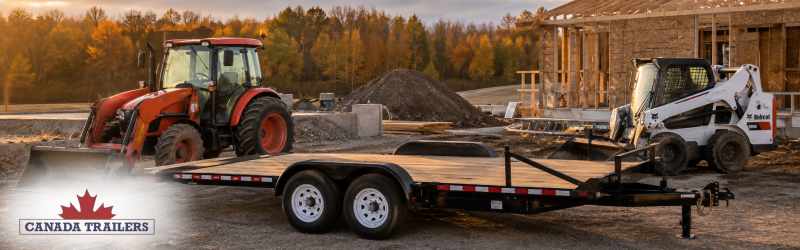
Hauling a tractor, skid steer, or compact machine starts with more than finding a trailer that looks big enough. Deck space, payload, axle capacity, ramps, and tie-down points all play a role in choosing a trailer that matches your equipment and helps you transport it with confidence.
Canada Trailers equipment trailers offer options for farmers, contractors, landscapers, and property owners with machinery to move. Before choosing a model, it pays to know your machine’s dimensions and weight, along with the trailer and tow vehicle ratings that will determine the right setup for the job.
What Size Trailer Do You Need to Haul a Tractor?
The right trailer size depends on your tractor’s overall length, width, operating weight, and attachments. Measure the machine with loaders, buckets, backhoes, or other implements installed, then choose a trailer with enough deck space for positioning and securement. Payload, GVWR, axle ratings, and tow vehicle capacity must also be suitable for the total loaded weight.
Start With the Machine, Not the Trailer
Before comparing Canada Trailers equipment trailers, start with the specifications of the machine you plan to haul. Two tractors may look similar but have very different dimensions and operating weights, especially once loaders, buckets, backhoes, or other attachments are added.
Gather these details before shopping for a trailer:
- Overall length: Measure the machine from its furthest points, including installed attachments.
- Overall width: Confirm that the equipment will fit comfortably on the usable deck.
- Operating weight: Use the weight of the machine in its actual working configuration whenever possible.
- Attachments: Include loaders, buckets, forks, mower decks, backhoes, and other implements in your calculations.
- Additional cargo: Account for tools, spare attachments, and other items that may travel on the trailer.
If you regularly move more than one machine, consider the largest and heaviest equipment you expect to haul. Choosing around that machine can give you more flexibility for smaller tractors, skid steers, and equipment while helping you avoid outgrowing your trailer too quickly.
Always verify dimensions and weights using the equipment manufacturer’s specifications. Once you know exactly what needs to fit on the trailer, you can begin comparing deck dimensions, payload capacity, GVWR, axles, and other important features.
How Much Deck Length Do You Really Need?
A tractor or skid steer fitting on the trailer does not necessarily mean the deck is the right size. You also need enough usable space to position the machine properly, distribute its weight, and secure it before travelling.
When determining the deck length you need, consider:
- Overall machine length: Measure from the furthest front point to the furthest rear point.
- Attachments: Loaders, buckets, backhoes, forks, and other implements can add considerable length.
- Positioning space: Extra deck room gives you more flexibility to position equipment for appropriate weight distribution.
- Securement: Leave enough space to access tie-down points and properly secure the machine and its attachments.
- Additional equipment: If you regularly carry buckets, implements, or tools, account for the space they require too.
For example, a compact tractor may fit comfortably on a particular deck by itself, but adding a front loader and rear attachment could change the required length significantly. This is why measuring your equipment in the configuration you actually haul is so important.
When comparing Canada Trailers equipment trailers, look at the usable deck dimensions rather than trailer length alone. A little additional room can provide valuable flexibility, especially if you haul different machines or attachments throughout the year.
Payload vs. GVWR: Know the Difference Before Loading
When choosing an equipment trailer, GVWR and payload are two numbers you need to understand. They are related, but they do not mean the same thing. Confusing them could lead you to choose a trailer that does not have enough capacity for your tractor, skid steer, or other machinery.
GVWR is the maximum allowable loaded weight of the trailer. Payload is the amount of cargo the trailer can carry after accounting for the trailer’s own weight.
A simple way to estimate payload is:
Payload capacity = GVWR – empty trailer weight
For example, if a trailer has a GVWR of 14,000 pounds and weighs 3,000 pounds empty, its theoretical payload would be approximately 11,000 pounds. Actual specifications should always be confirmed for the exact trailer.
When calculating your expected load, remember to include:
- The machine’s operating weight
- Buckets, loaders, forks, or backhoes
- Additional implements and attachments
- Tools and other cargo carried on the trailer
The trailer is only one part of the equation. Your tow vehicle, hitch, tires, axles, and other components must also be appropriately rated for the load. Before hauling equipment, check the specifications for your exact Canada Trailers model and tow vehicle rather than relying on estimates alone.
Axle Capacity Matters When Hauling Heavy Equipment
When you are transporting a tractor, skid steer, or compact excavator, axle capacity is another specification that deserves close attention. The trailer’s axles help support the load, but their ratings need to be considered alongside the trailer’s GVWR, payload, tires, suspension, and other components.
Heavier equipment can add up quickly, especially once attachments are included. Before choosing a Canada Trailers equipment trailer, consider:
- Axle ratings: Check the rated capacity of the axles on the specific trailer.
- Payload capacity: Make sure the trailer can accommodate the complete operating weight of your machine and attachments.
- Tires and wheels: Confirm their ratings are appropriate for the trailer and expected load.
- Brakes: Equipment trailers need an appropriate braking system for their weight and intended use.
- Weight distribution: Positioning the machine correctly helps distribute weight across the trailer and tow vehicle as intended.
Do not assume two trailers with similar deck dimensions can carry the same equipment. Different models may have different axles, GVWRs, payload capacities, and component ratings.
When comparing Canada Trailers equipment trailers at McFarlane Trailer Sales, check the specifications for the exact model you are considering. Matching those ratings to your machine is just as important as making sure the equipment physically fits on the deck.
Ramps and Loading Angle Can Make a Big Difference
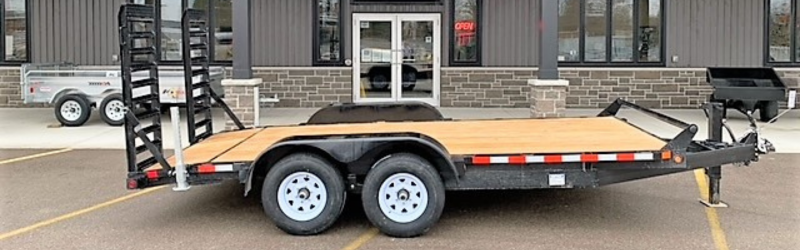
Getting your equipment onto the trailer safely is just as important as having enough deck space to carry it. Ramp length, width, capacity, and loading angle can all affect how easily a tractor, skid steer, or other compact machine can be loaded and unloaded.
When comparing equipment trailer ramps, consider:
- Ramp capacity: Confirm the ramps are rated to support the equipment you plan to load.
- Ramp width: Make sure the tires or tracks can travel securely up the ramps.
- Loading angle: A more gradual approach can be important for machines with limited ground clearance.
- Equipment type: Tracked and wheeled machines may have different loading requirements.
- Ramp placement: Check that the ramps can be positioned appropriately for your machine’s wheel or track width.
- Ground conditions: Whenever possible, load and unload on firm, stable, and level ground.
Ground clearance deserves particular attention. A tractor with attachments or a machine with a long wheelbase can potentially contact the trailer at the transition between the ramp and deck if the approach is too steep.
Before loading, inspect the ramps and confirm they are properly positioned and secured according to the trailer manufacturer’s instructions. Choosing a Canada Trailers equipment trailer with a ramp setup suited to your machinery can make regular loading and unloading more practical.
Tie-Down Points and Load Securement
Once your tractor, skid steer, or other machinery is positioned on the trailer, proper securement is essential. A trailer with well-placed tie-down points makes it easier to secure equipment correctly and keep it from shifting while you are on the road.
When preparing equipment for transport, pay attention to:
- Tie-down locations: Make sure the trailer provides suitable securement points for the machine you are hauling.
- Securement equipment: Use chains, binders, straps, or other equipment that is appropriate and properly rated for the load.
- Attachments: Buckets, backhoes, forks, and other implements may require additional securement.
- Condition: Inspect chains, straps, binders, and tie-down points for wear or damage before each trip.
- Equipment positioning: Make sure the machine is positioned appropriately before securing it to the trailer.
- Local requirements: Follow all applicable cargo securement regulations for the equipment and jurisdiction in which you are travelling.
Do not rely on the machine’s parking brake or transmission alone to keep it in place. Equipment should be properly secured to suitable tie-down points before the trailer moves.
When comparing Canada Trailers equipment trailers, consider tie-down locations along with payload and deck dimensions. A trailer needs to do more than fit your machine. It should also give you the right setup to secure it properly for transport.
Weight Distribution and Tongue Weight
Where your tractor, skid steer, or other machine sits on the trailer matters. Even when the equipment fits comfortably and stays within the trailer’s payload rating, poor weight distribution can affect towing stability and place too much or too little weight on the hitch.
Tongue weight is the amount of the loaded trailer’s weight that presses down on the hitch. The correct amount depends on the trailer, tow vehicle, hitch, and load, so always follow the manufacturers’ specifications rather than relying on a one-size-fits-all number.
When positioning equipment, consider:
- Heavy attachments: Front loaders, buckets, backhoes, and other attachments can shift the machine’s centre of gravity.
- Machine position: Moving equipment forward or backward changes how weight is distributed between the trailer axles and hitch.
- Additional cargo: Buckets, implements, tools, and supplies can affect the balance of the entire load.
- Trailer ratings: Stay within the GVWR, payload, axle, tire, and other applicable limits.
- Tow vehicle limits: Confirm that the truck and hitch are rated for the loaded trailer and resulting tongue weight.
Avoid positioning machinery based solely on where it is easiest to load or unload. When comparing Canada Trailers equipment trailers, consider whether the deck provides enough room to position your machine appropriately while still allowing for proper securement.
Do Not Forget the Tow Vehicle
The right equipment trailer still needs the right tow vehicle. Before hauling a tractor, skid steer, or small machine, confirm that your truck is properly equipped and rated for the trailer’s expected loaded weight.
Check these specifications before you tow:
- Towing capacity: Verify the maximum trailer weight your specific vehicle configuration is rated to tow.
- GCWR: Check the maximum allowable combined weight of the tow vehicle and loaded trailer.
- Hitch rating: Make sure the hitch and related towing components are rated appropriately.
- Braking requirements: Confirm that the truck and trailer braking systems meet the requirements for your setup.
- Vehicle payload: Passengers, tools, fuel, accessories, and tongue weight can all affect available vehicle payload.
- Truck configuration: Engine, drivetrain, axle ratio, cab style, and other options can affect towing ratings.
Do not rely on a general towing-capacity figure for a particular truck model. Ratings can vary significantly between configurations, so check the owner’s manual, manufacturer documentation, and vehicle-specific information before loading.
Choosing a higher-capacity Canada Trailers equipment trailer does not automatically mean your current truck can safely tow it when loaded. Matching the machine, trailer, hitch, and tow vehicle as a complete system is essential when selecting the right setup.
Matching the Trailer to Common Equipment
Different machines place different demands on an equipment trailer. A compact tractor with a loader may need additional deck length, while a skid steer may put more emphasis on payload and ramp capacity. Knowing your machine’s exact dimensions and operating weight will help narrow down the Canada Trailers models that make sense.
| Equipment | Key Measurements to Check | Weight Considerations | Trailer Features to Prioritize |
| Compact tractor | Length, width, attachments | Tractor plus loader, bucket, and implements | Deck space, ramps, tie-down points |
| Skid steer | Width, length, operating weight | Machine plus bucket or attachment | Payload, axle capacity, heavy-duty ramps |
| Mini excavator | Width, overall length, operating weight | Machine plus bucket and attachments | Payload, deck length, securement points |
| Zero-turn mower | Width and overall length | Machine plus accessories | Accessible ramps and suitable deck dimensions |
| Compact construction equipment | Overall dimensions | Complete operating weight | Payload, axle ratings, ramps, securement |
| Tractor with loader or backhoe | Full overall length | Tractor plus installed attachments | Longer deck, payload, weight distribution |
These are general considerations rather than specific trailer recommendations. Equipment dimensions and weights can vary significantly between manufacturers, models, and configurations. Always check the specifications for the exact machine you intend to transport.
Once you have those numbers, compare them with the current Canada Trailers equipment trailer inventory at McFarlane Trailer Sales. If you are unsure which setup fits, bring your machine’s make, model, weight, dimensions, and attachments to the McFarlane team for help narrowing down your options.
Choose the Trailer Around the Equipment
The right equipment trailer starts with the machine you need to move. Knowing your tractor or skid steer’s dimensions, operating weight, and attachments makes it easier to compare deck length, payload, GVWR, axle capacity, ramps, and tie-down points with confidence.
Remember to look at the complete towing setup, not just the trailer. Your equipment, trailer, tow vehicle, hitch, and securement system all need to work together for the job at hand.
Ready to find the right match? Browse the Canada Trailers equipment trailer inventory at McFarlane Trailer Sales or contact our team with your machine’s make, model, dimensions, operating weight, attachments, and tow vehicle. We can help you compare available options and narrow down a trailer that fits your equipment and hauling needs.