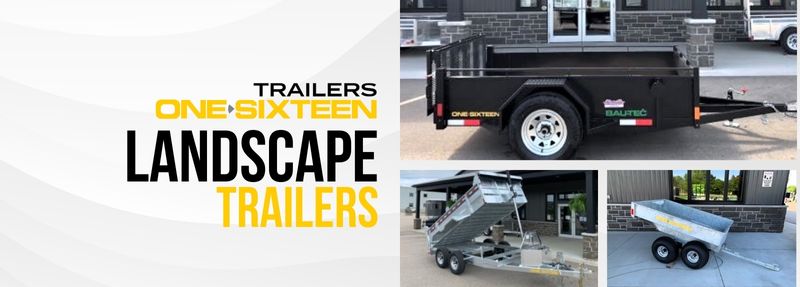
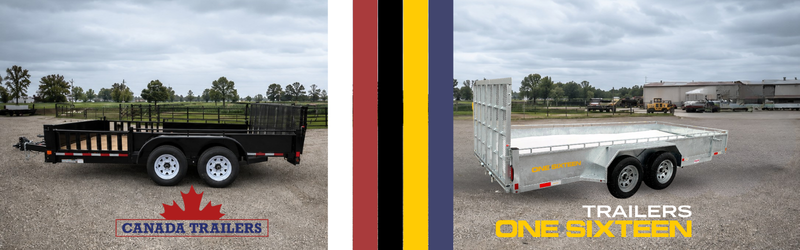
 A heavy-duty trailer should fit the work you do every week—not just the heaviest job you might handle once a year.Canada Trailers and One Sixteen Trailers both offer practical options for farmers, contractors, landscapers and industrial operators. The better choice depends on what you haul, how frequently you use the trailer and how you load your equipment or materials.At McFarlane Trailer Sales in New Hamburg, we carry both brands. Rather than choosing by name alone, compare the specifications and features that affect your daily work: capacity, axle configuration, deck size, loading system and tie-down options.
Canada Trailers and One Sixteen Trailers Serve Different Workloads
There is no single trailer that is best for every operation.A farmer moving compact equipment between properties has different requirements from a contractor transporting a skid steer every day. A landscaping company may need quick loading and flexible cargo space, while an industrial operation may place more importance on deck strength, payload and secure tie-down points.Both Canada Trailers and One Sixteen Trailers offer configurations for demanding work. Your decision should begin with a few practical questions:- What equipment or material will you haul?
- What is the heaviest regular load?
- How often will the trailer be used?
- Will you load with ramps, a forklift or a tilt deck?
- Do you need a lower loading height or a maximum deck width?
- Will the trailer travel mainly on highways, rural roads or job sites?
Start With Payload, Not Trailer Size
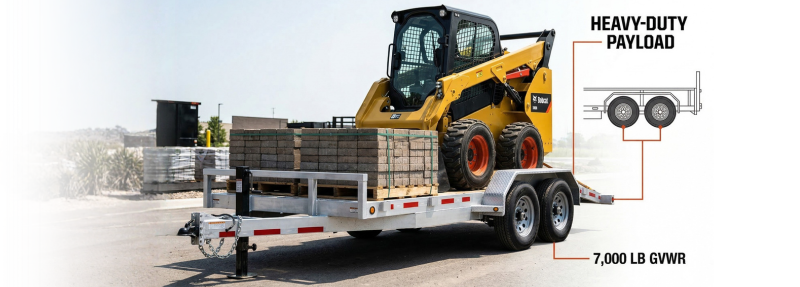
A longer or larger trailer does not always mean it can safely carry more weight.Payload is the amount of cargo a trailer can carry after accounting for the trailer’s own weight. When comparing models, review the gross vehicle weight rating, trailer weight, axle ratings and resulting payload.Your selection should be based on the heaviest load you expect to move regularly. Leave enough capacity for attachments, fuel, tools and other items that may travel with the main machine.For example, the listed operating weight of a skid steer may not include a bucket, forks or additional attachments. Those items can add considerable weight.Never choose a trailer with a capacity that only barely matches the equipment. A suitable margin gives you more flexibility and helps prevent overloading.Single-Axle or Tandem-Axle?
Axle configuration affects capacity, stability, maintenance and towing requirements.Single-axle trailers
A single-axle trailer may suit lighter or less frequent work, including:- Small lawn and garden equipment
- Light building supplies
- Compact utility vehicles
- Property maintenance tools
- General farm supplies
Tandem-axle trailers
A tandem-axle trailer is generally better suited to heavier equipment and frequent commercial use. Two axles can provide greater capacity and improved stability, particularly on highways or uneven rural roads.Typical uses include:- Skid steers
- Compact excavators
- Tractors and attachments
- Construction equipment
- Palletized materials
- Multiple mowers or utility vehicles
Compare Standard Decks and Deckover Trailers
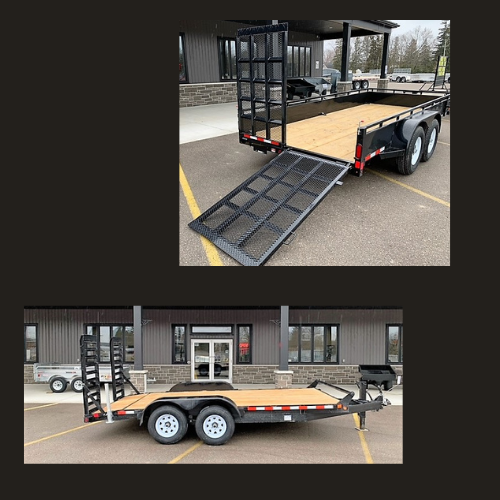
Deck design affects loading height and usable width.Standard equipment or flatbed decks
On a standard flatbed configuration, the deck sits between the wheels. This keeps the platform lower to the ground and can reduce the ramp angle.A lower deck may be useful when loading:- Skid steers
- Compact tractors
- Lawn equipment
- Low-clearance machinery
- Wheeled construction equipment
Deckover trailers
A deckover trailer places the deck above the wheels. This creates a flat platform that uses the full width of the trailer.Deckovers may be a better fit for:- Wide equipment
- Building materials
- Pallets
- Farm supplies
- Industrial loads are loaded from the side
- Irregular or oversized cargo
Select a Deck Length That Fits the Equipment
Deck length should match both the footprint of the load and the way its weight sits over the axles.A trailer that is too short may not give you enough room to position machinery correctly. A trailer that is much longer than needed can add unnecessary weight, reduce manoeuvrability and make storage more difficult.Before comparing models, measure your equipment from its furthest front point to its furthest rear point. Include buckets, implements, mower decks and other attachments that will remain installed during transport.Also consider whether your operation may add larger equipment in the near future. A modest amount of additional deck space can provide useful flexibility, but there is little value in pulling more trailer than your work requires.Choose the Right Loading System
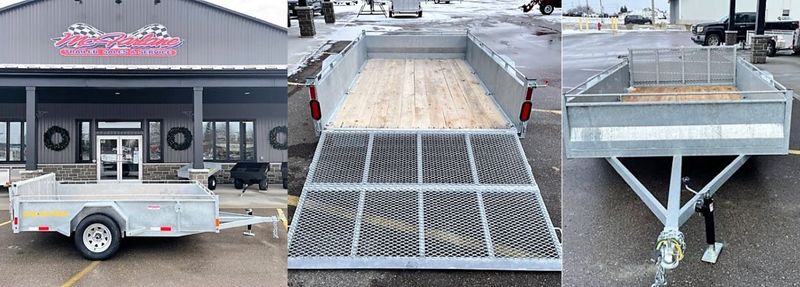
The way you load the trailer affects efficiency and safety on every job.Stand-up or fold-down ramps
These ramps are common on utility and equipment trailers. They are straightforward, always available and work well for many types of wheeled equipment.They may be suitable for:- Lawn tractors
- ATVs and utility vehicles
- Compact equipment
- Landscaping machinery
- General farm equipment
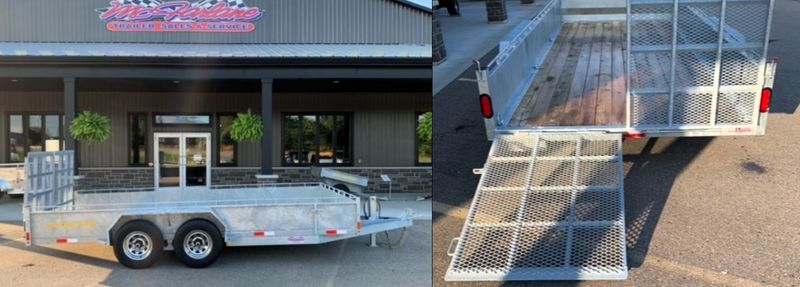
Slide-in ramps
Slide-in ramps store beneath the deck when they are not in use. They keep the rear of the trailer open and can provide more flexibility in ramp placement.This configuration may be useful when equipment has different wheel widths or when the trailer is also used for forklift-loaded cargo.Tilt decks
A tilt trailer allows the deck to lower toward the ground, reducing or eliminating the need to position separate ramps.Tilt decks can make frequent loading more efficient, particularly for wheeled equipment. They may also help with low-clearance machines that could catch on a steeper ramp transition.The right loading system depends on how frequently you load and unload, the ground clearance of your equipment and the conditions at your usual worksites.Look Beyond the Main Specifications
Payload and deck size are important, but smaller features often determine how well a trailer works each day.When comparing Canada Trailers and One Sixteen Trailers, inspect:- D-rings and other tie-down points
- Stake pockets
- Rub rails
- Jack capacity and position
- Coupler type
- Trailer brakes
- Breakaway system
- Lighting and wiring protection
- Tool or chain storage
- Spare tire location
- Fenders and step surfaces
- Ramp storage and latching hardware
Consider Farm, Contractor and Industrial Use
Different industries tend to prioritize different trailer features.Farmers and rural property operators
Farm use may involve tractors, implements, livestock supplies, fencing materials and seasonal equipment. Ground conditions can also vary from paved roads to gravel lanes and uneven yards.Useful priorities may include:- Strong suspension and axle capacity
- Practical deck width
- Multiple tie-down locations
- Durable lighting and wiring
- Easy loading on uneven surfaces
Contractors and landscapers
Contractors often load and unload several times per day. Loading speed, equipment access and deck layout may be as important as maximum capacity.Look closely at:- Ramp style
- Loading angle
- Toolbox storage
- Deck length
- Tie-down placement
- Manoeuvrability in residential or urban job sites
Industrial and commercial operators
Industrial users may transport palletized materials, machinery or irregular loads. They may require full-width decks, higher capacities and flexible side loading.Deckover configurations, stake pockets and reinforced securement points may be particularly valuable.Pre-Haul Checks Still Matter
Even the right trailer must be loaded and maintained properly.Before leaving the yard:- Confirm that the cargo stays within the trailer’s rated payload.
- Position the load to maintain proper tongue weight.
- Use tie-down equipment rated for the cargo.
- Check the coupler, safety chains and breakaway cable.
- Inspect tires, wheels, brakes and lights.
- Make sure ramps, gates and storage components are secured.
- Confirm that the tow vehicle is properly rated.