Canada Trailers Equipment Trailers: What to Know Before Hauling Tractors, Skid Steers, or Small Machinery

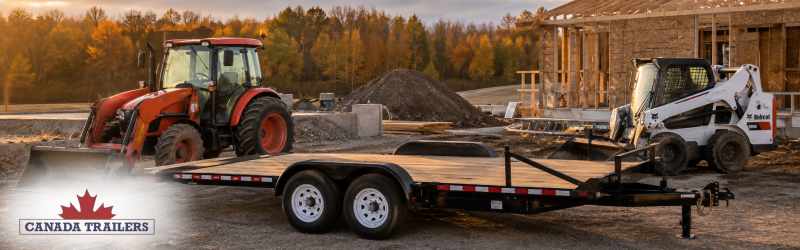
 Red tractor and Bobcat skid-steer on a construction site with a flatbed trailer, fall trees in the background.Hauling a tractor, skid steer, or compact machine starts with more than finding a trailer that looks big enough. Deck space, payload, axle capacity, ramps, and tie-down points all play a role in choosing a trailer that matches your equipment and helps you transport it with confidence.Canada Trailers equipment trailers offer options for farmers, contractors, landscapers, and property owners with machinery to move. Before choosing a model, it pays to know your machine's dimensions and weight, along with the trailer and tow vehicle ratings that will determine the right setup for the job.

What Size Trailer Do You Need to Haul a Tractor?

The right trailer size depends on your tractor's overall length, width, operating weight, and attachments. Measure the machine with loaders, buckets, backhoes, or other implements installed, then choose a trailer with enough deck space for positioning and securement. Payload, GVWR, axle ratings, and tow vehicle capacity must also be suitable for the total loaded weight.

Start With the Machine, Not the Trailer

Before comparing Canada Trailers equipment trailers, start with the specifications of the machine you plan to haul. Two tractors may look similar but have very different dimensions and operating weights, especially once loaders, buckets, backhoes, or other attachments are added.Gather these details before shopping for a trailer:
  • Overall length: Measure the machine from its furthest points, including installed attachments.
  • Overall width: Confirm that the equipment will fit comfortably on the usable deck.
  • Operating weight: Use the weight of the machine in its actual working configuration whenever possible.
  • Attachments: Include loaders, buckets, forks, mower decks, backhoes, and other implements in your calculations.
  • Additional cargo: Account for tools, spare attachments, and other items that may travel on the trailer.
If you regularly move more than one machine, consider the largest and heaviest equipment you expect to haul. Choosing around that machine can give you more flexibility for smaller tractors, skid steers, and equipment while helping you avoid outgrowing your trailer too quickly.Always verify dimensions and weights using the equipment manufacturer's specifications. Once you know exactly what needs to fit on the trailer, you can begin comparing deck dimensions, payload capacity, GVWR, axles, and other important features.

How Much Deck Length Do You Really Need?

A tractor or skid steer fitting on the trailer does not necessarily mean the deck is the right size. You also need enough usable space to position the machine properly, distribute its weight, and secure it before travelling.When determining the deck length you need, consider:
  • Overall machine length: Measure from the furthest front point to the furthest rear point.
  • Attachments: Loaders, buckets, backhoes, forks, and other implements can add considerable length.
  • Positioning space: Extra deck room gives you more flexibility to position equipment for appropriate weight distribution.
  • Securement: Leave enough space to access tie-down points and properly secure the machine and its attachments.
  • Additional equipment: If you regularly carry buckets, implements, or tools, account for the space they require too.
For example, a compact tractor may fit comfortably on a particular deck by itself, but adding a front loader and rear attachment could change the required length significantly. This is why measuring your equipment in the configuration you actually haul is so important.When comparing Canada Trailers equipment trailers, look at the usable deck dimensions rather than trailer length alone. A little additional room can provide valuable flexibility, especially if you haul different machines or attachments throughout the year.

Payload vs. GVWR: Know the Difference Before Loading

When choosing an equipment trailer, GVWR and payload are two numbers you need to understand. They are related, but they do not mean the same thing. Confusing them could lead you to choose a trailer that does not have enough capacity for your tractor, skid steer, or other machinery.GVWR is the maximum allowable loaded weight of the trailer. Payload is the amount of cargo the trailer can carry after accounting for the trailer's own weight.A simple way to estimate payload is:Payload capacity = GVWR - empty trailer weightFor example, if a trailer has a GVWR of 14,000 pounds and weighs 3,000 pounds empty, its theoretical payload would be approximately 11,000 pounds. Actual specifications should always be confirmed for the exact trailer.When calculating your expected load, remember to include:
  • The machine's operating weight
  • Buckets, loaders, forks, or backhoes
  • Additional implements and attachments
  • Tools and other cargo carried on the trailer
The trailer is only one part of the equation. Your tow vehicle, hitch, tires, axles, and other components must also be appropriately rated for the load. Before hauling equipment, check the specifications for your exact Canada Trailers model and tow vehicle rather than relying on estimates alone.

Axle Capacity Matters When Hauling Heavy Equipment

When you are transporting a tractor, skid steer, or compact excavator, axle capacity is another specification that deserves close attention. The trailer's axles help support the load, but their ratings need to be considered alongside the trailer's GVWR, payload, tires, suspension, and other components.Heavier equipment can add up quickly, especially once attachments are included. Before choosing a Canada Trailers equipment trailer, consider:
  • Axle ratings: Check the rated capacity of the axles on the specific trailer.
  • Payload capacity: Make sure the trailer can accommodate the complete operating weight of your machine and attachments.
  • Tires and wheels: Confirm their ratings are appropriate for the trailer and expected load.
  • Brakes: Equipment trailers need an appropriate braking system for their weight and intended use.
  • Weight distribution: Positioning the machine correctly helps distribute weight across the trailer and tow vehicle as intended.
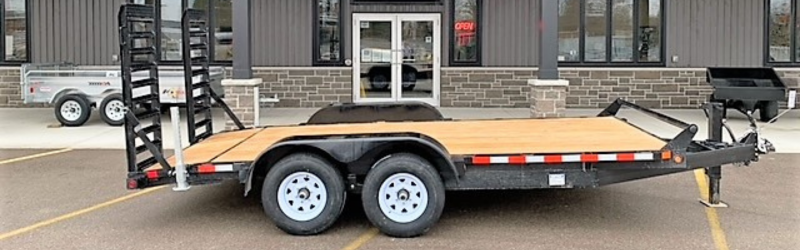
Do not assume two trailers with similar deck dimensions can carry the same equipment. Different models may have different axles, GVWRs, payload capacities, and component ratings.When comparing Canada Trailers equipment trailers at McFarlane Trailer Sales, check the specifications for the exact model you are considering. Matching those ratings to your machine is just as important as making sure the equipment physically fits on the deck.

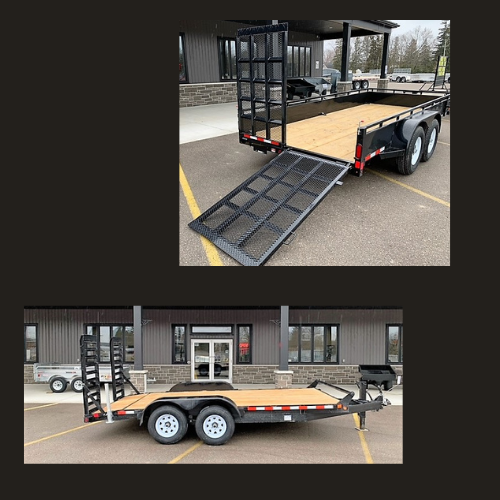
Dual-axle flatbed trailer with a wooden deck and rear loading ramps parked in a parking lot in front of a commercial building.

Ramps and Loading Angle Can Make a Big Difference

Getting your equipment onto the trailer safely is just as important as having enough deck space to carry it. Ramp length, width, capacity, and loading angle can all affect how easily a tractor, skid steer, or other compact machine can be loaded and unloaded.When comparing equipment trailer ramps, consider:
  • Ramp capacity: Confirm the ramps are rated to support the equipment you plan to load.
  • Ramp width: Make sure the tires or tracks can travel securely up the ramps.
  • Loading angle: A more gradual approach can be important for machines with limited ground clearance.
  • Equipment type: Tracked and wheeled machines may have different loading requirements.
  • Ramp placement: Check that the ramps can be positioned appropriately for your machine's wheel or track width.
  • Ground conditions: Whenever possible, load and unload on firm, stable, and level ground.
Ground clearance deserves particular attention. A tractor with attachments or a machine with a long wheelbase can potentially contact the trailer at the transition between the ramp and deck if the approach is too steep.Before loading, inspect the ramps and confirm they are properly positioned and secured according to the trailer manufacturer's instructions. Choosing a Canada Trailers equipment trailer with a ramp setup suited to your machinery can make regular loading and unloading more practical.

Tie-Down Points and Load Securement

Once your tractor, skid steer, or other machinery is positioned on the trailer, proper securement is essential. A trailer with well-placed tie-down points makes it easier to secure equipment correctly and keep it from shifting while you are on the road.When preparing equipment for transport, pay attention to:
  • Tie-down locations: Make sure the trailer provides suitable securement points for the machine you are hauling.
  • Securement equipment: Use chains, binders, straps, or other equipment that is appropriate and properly rated for the load.
  • Attachments: Buckets, backhoes, forks, and other implements may require additional securement.
  • Condition: Inspect chains, straps, binders, and tie-down points for wear or damage before each trip.
  • Equipment positioning: Make sure the machine is positioned appropriately before securing it to the trailer.
  • Local requirements: Follow all applicable cargo securement regulations for the equipment and jurisdiction in which you are travelling.
Do not rely on the machine's parking brake or transmission alone to keep it in place. Equipment should be properly secured to suitable tie-down points before the trailer moves.When comparing Canada Trailers equipment trailers, consider tie-down locations along with payload and deck dimensions. A trailer needs to do more than fit your machine. It should also give you the right setup to secure it properly for transport.

Weight Distribution and Tongue Weight

Where your tractor, skid steer, or other machine sits on the trailer matters. Even when the equipment fits comfortably and stays within the trailer's payload rating, poor weight distribution can affect towing stability and place too much or too little weight on the hitch.Tongue weight is the amount of the loaded trailer's weight that presses down on the hitch. The correct amount depends on the trailer, tow vehicle, hitch, and load, so always follow the manufacturers' specifications rather than relying on a one-size-fits-all number.When positioning equipment, consider:
  • Heavy attachments: Front loaders, buckets, backhoes, and other attachments can shift the machine's centre of gravity.
  • Machine position: Moving equipment forward or backward changes how weight is distributed between the trailer axles and hitch.
  • Additional cargo: Buckets, implements, tools, and supplies can affect the balance of the entire load.
  • Trailer ratings: Stay within the GVWR, payload, axle, tire, and other applicable limits.
  • Tow vehicle limits: Confirm that the truck and hitch are rated for the loaded trailer and resulting tongue weight.
Avoid positioning machinery based solely on where it is easiest to load or unload. When comparing Canada Trailers equipment trailers, consider whether the deck provides enough room to position your machine appropriately while still allowing for proper securement.

Do Not Forget the Tow Vehicle

The right equipment trailer still needs the right tow vehicle. Before hauling a tractor, skid steer, or small machine, confirm that your truck is properly equipped and rated for the trailer's expected loaded weight.Check these specifications before you tow:
  • Towing capacity: Verify the maximum trailer weight your specific vehicle configuration is rated to tow.
  • GCWR: Check the maximum allowable combined weight of the tow vehicle and loaded trailer.
  • Hitch rating: Make sure the hitch and related towing components are rated appropriately.
  • Braking requirements: Confirm that the truck and trailer braking systems meet the requirements for your setup.
  • Vehicle payload: Passengers, tools, fuel, accessories, and tongue weight can all affect available vehicle payload.
  • Truck configuration: Engine, drivetrain, axle ratio, cab style, and other options can affect towing ratings.
Do not rely on a general towing-capacity figure for a particular truck model. Ratings can vary significantly between configurations, so check the owner's manual, manufacturer documentation, and vehicle-specific information before loading.Choosing a higher-capacity Canada Trailers equipment trailer does not automatically mean your current truck can safely tow it when loaded. Matching the machine, trailer, hitch, and tow vehicle as a complete system is essential when selecting the right setup.

Matching the Trailer to Common Equipment

Different machines place different demands on an equipment trailer. A compact tractor with a loader may need additional deck length, while a skid steer may put more emphasis on payload and ramp capacity. Knowing your machine's exact dimensions and operating weight will help narrow down the Canada Trailers models that make sense.
EquipmentKey Measurements to CheckWeight ConsiderationsTrailer Features to Prioritize
Compact tractorLength, width, attachmentsTractor plus loader, bucket, and implementsDeck space, ramps, tie-down points
Skid steerWidth, length, operating weightMachine plus bucket or attachmentPayload, axle capacity, heavy-duty ramps
Mini excavatorWidth, overall length, operating weightMachine plus bucket and attachmentsPayload, deck length, securement points
Zero-turn mowerWidth and overall lengthMachine plus accessoriesAccessible ramps and suitable deck dimensions
Compact construction equipmentOverall dimensionsComplete operating weightPayload, axle ratings, ramps, securement
Tractor with loader or backhoeFull overall lengthTractor plus installed attachmentsLonger deck, payload, weight distribution
These are general considerations rather than specific trailer recommendations. Equipment dimensions and weights can vary significantly between manufacturers, models, and configurations. Always check the specifications for the exact machine you intend to transport.Once you have those numbers, compare them with the current Canada Trailers equipment trailer inventory at McFarlane Trailer Sales. If you are unsure which setup fits, bring your machine's make, model, weight, dimensions, and attachments to the McFarlane team for help narrowing down your options.

Choose the Trailer Around the Equipment

The right equipment trailer starts with the machine you need to move. Knowing your tractor or skid steer's dimensions, operating weight, and attachments makes it easier to compare deck length, payload, GVWR, axle capacity, ramps, and tie-down points with confidence.Remember to look at the complete towing setup, not just the trailer. Your equipment, trailer, tow vehicle, hitch, and securement system all need to work together for the job at hand.Ready to find the right match? Browse the Canada Trailers equipment trailer inventory at McFarlane Trailer Sales or contact our team with your machine's make, model, dimensions, operating weight, attachments, and tow vehicle. We can help you compare available options and narrow down a trailer that fits your equipment and hauling needs.

Canada Trailers vs. One Sixteen Trailers: Which Heavy-Duty Trailer Fits Your Workload?

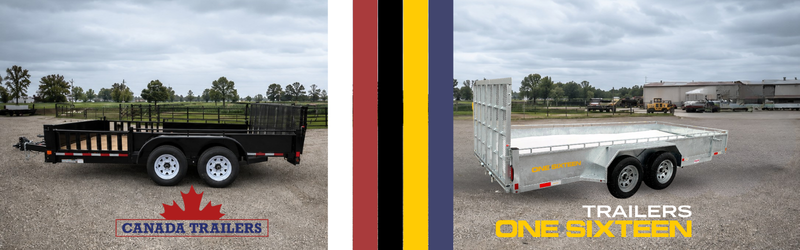
 Two utility trailers on a gravel lot: a black dual-axle trailer on the left with Canada Trailers branding and a silver dual-axle trailer on the right with One Sixteen branding, separated by vertical color bars.A heavy-duty trailer should fit the work you do every week—not just the heaviest job you might handle once a year.Canada Trailers and One Sixteen Trailers both offer practical options for farmers, contractors, landscapers and industrial operators. The better choice depends on what you haul, how frequently you use the trailer and how you load your equipment or materials.At McFarlane Trailer Sales in New Hamburg, we carry both brands. Rather than choosing by name alone, compare the specifications and features that affect your daily work: capacity, axle configuration, deck size, loading system and tie-down options.

Canada Trailers and One Sixteen Trailers Serve Different Workloads

There is no single trailer that is best for every operation.A farmer moving compact equipment between properties has different requirements from a contractor transporting a skid steer every day. A landscaping company may need quick loading and flexible cargo space, while an industrial operation may place more importance on deck strength, payload and secure tie-down points.Both Canada Trailers and One Sixteen Trailers offer configurations for demanding work. Your decision should begin with a few practical questions:
  • What equipment or material will you haul?
  • What is the heaviest regular load?
  • How often will the trailer be used?
  • Will you load with ramps, a forklift or a tilt deck?
  • Do you need a lower loading height or a maximum deck width?
  • Will the trailer travel mainly on highways, rural roads or job sites?
Answering these questions will narrow the available models quickly.

Start With Payload, Not Trailer Size

A longer or larger trailer does not always mean it can safely carry more weight.Payload is the amount of cargo a trailer can carry after accounting for the trailer’s own weight. When comparing models, review the gross vehicle weight rating, trailer weight, axle ratings and resulting payload.Your selection should be based on the heaviest load you expect to move regularly. Leave enough capacity for attachments, fuel, tools and other items that may travel with the main machine.For example, the listed operating weight of a skid steer may not include a bucket, forks or additional attachments. Those items can add considerable weight.Never choose a trailer with a capacity that only barely matches the equipment. A suitable margin gives you more flexibility and helps prevent overloading.

Single-Axle or Tandem-Axle?

Axle configuration affects capacity, stability, maintenance and towing requirements.

Single-axle trailers

A single-axle trailer may suit lighter or less frequent work, including:
  • Small lawn and garden equipment
  • Light building supplies
  • Compact utility vehicles
  • Property maintenance tools
  • General farm supplies
These trailers are often easier to manoeuvre in tight yards and may be suitable for lighter tow vehicles. They also have fewer tires, hubs and brakes to maintain.

Tandem-axle trailers

A tandem-axle trailer is generally better suited to heavier equipment and frequent commercial use. Two axles can provide greater capacity and improved stability, particularly on highways or uneven rural roads.Typical uses include:
  • Skid steers
  • Compact excavators
  • Tractors and attachments
  • Construction equipment
  • Palletized materials
  • Multiple mowers or utility vehicles
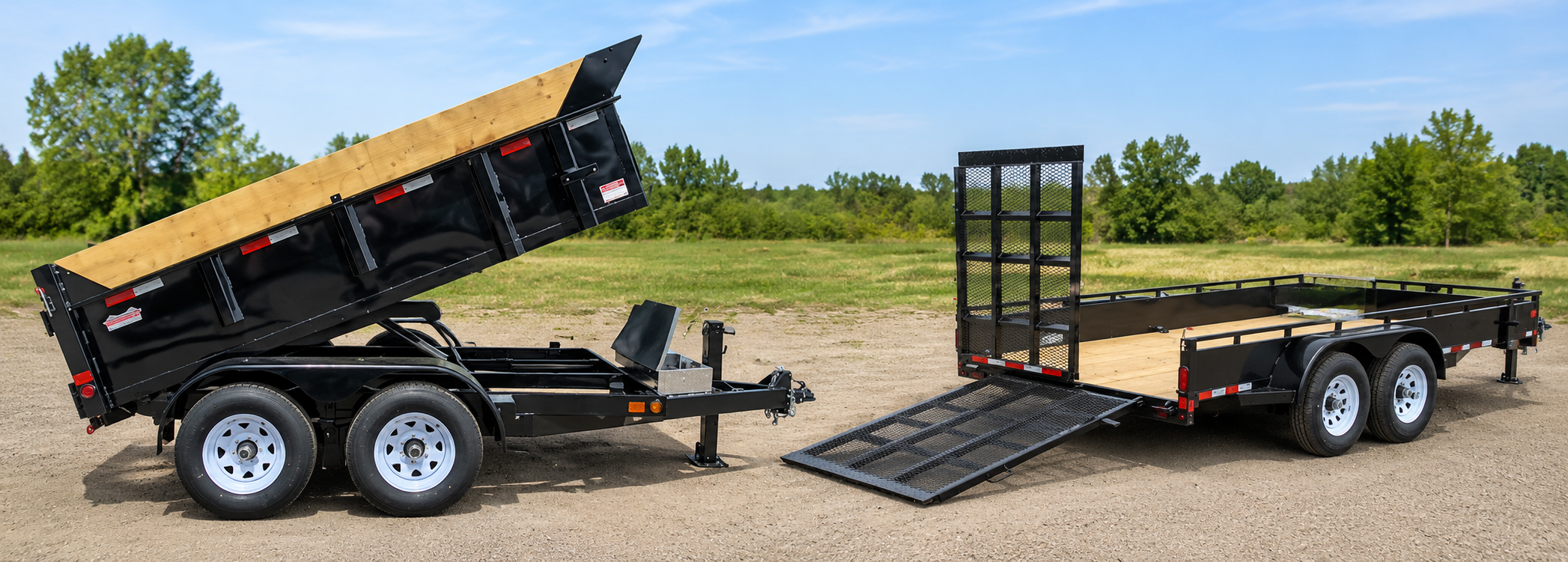
Do not assume every tandem-axle model has the same capacity. Always compare the ratings of the specific Canada Trailers and One Sixteen models being considered.Your tow vehicle must also be rated for the trailer and its loaded weight.Flatbed trailer with a lowered ramp, parked in a lot, showing a wooden deck and metal rails on a two-axle setup (for equipment transport).

Compare Standard Decks and Deckover Trailers

Deck design affects loading height and usable width.

Standard equipment or flatbed decks

On a standard flatbed configuration, the deck sits between the wheels. This keeps the platform lower to the ground and can reduce the ramp angle.A lower deck may be useful when loading:
  • Skid steers
  • Compact tractors
  • Lawn equipment
  • Low-clearance machinery
  • Wheeled construction equipment
The trade-off is that the fenders may limit usable width.

Deckover trailers

A deckover trailer places the deck above the wheels. This creates a flat platform that uses the full width of the trailer.Deckovers may be a better fit for:
  • Wide equipment
  • Building materials
  • Pallets
  • Farm supplies
  • Industrial loads are loaded from the side
  • Irregular or oversized cargo
Because the deck is higher, loading may require longer ramps or a different loading system. Farmers and industrial operators should weigh the benefit of full-width deck space against the higher loading height.

Select a Deck Length That Fits the Equipment

Deck length should match both the footprint of the load and the way its weight sits over the axles.A trailer that is too short may not give you enough room to position machinery correctly. A trailer that is much longer than needed can add unnecessary weight, reduce manoeuvrability and make storage more difficult.Before comparing models, measure your equipment from its furthest front point to its furthest rear point. Include buckets, implements, mower decks and other attachments that will remain installed during transport.Also consider whether your operation may add larger equipment in the near future. A modest amount of additional deck space can provide useful flexibility, but there is little value in pulling more trailer than your work requires.

Choose the Right Loading System

The way you load the trailer affects efficiency and safety on every job.

Stand-up or fold-down ramps

These ramps are common on utility and equipment trailers. They are straightforward, always available and work well for many types of wheeled equipment.They may be suitable for:
  • Lawn tractors
  • ATVs and utility vehicles
  • Compact equipment
  • Landscaping machinery
  • General farm equipment
Check the ramp rating, width and loading angle against the equipment you plan to carry.

Slide-in ramps

Slide-in ramps store beneath the deck when they are not in use. They keep the rear of the trailer open and can provide more flexibility in ramp placement.This configuration may be useful when equipment has different wheel widths or when the trailer is also used for forklift-loaded cargo.

Tilt decks

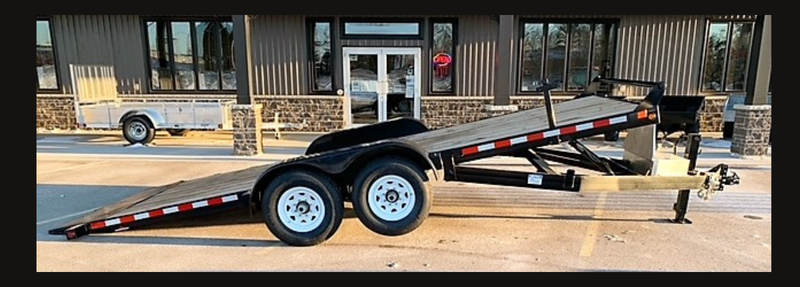
A tilt trailer allows the deck to lower toward the ground, reducing or eliminating the need to position separate ramps.Tilt decks can make frequent loading more efficient, particularly for wheeled equipment. They may also help with low-clearance machines that could catch on a steeper ramp transition.The right loading system depends on how frequently you load and unload, the ground clearance of your equipment and the conditions at your usual worksites.

Look Beyond the Main Specifications

Payload and deck size are important, but smaller features often determine how well a trailer works each day.When comparing Canada Trailers and One Sixteen Trailers, inspect:
  • D-rings and other tie-down points
  • Stake pockets
  • Rub rails
  • Jack capacity and position
  • Coupler type
  • Trailer brakes
  • Breakaway system
  • Lighting and wiring protection
  • Tool or chain storage
  • Spare tire location
  • Fenders and step surfaces
  • Ramp storage and latching hardware
Tie-down placement is especially important. A trailer can have enough payload and deck space but still be inconvenient if the securement points do not work with your equipment.

Consider Farm, Contractor and Industrial Use

Different industries tend to prioritize different trailer features.

Farmers and rural property operators

Farm use may involve tractors, implements, livestock supplies, fencing materials and seasonal equipment. Ground conditions can also vary from paved roads to gravel lanes and uneven yards.Useful priorities may include:
  • Strong suspension and axle capacity
  • Practical deck width
  • Multiple tie-down locations
  • Durable lighting and wiring
  • Easy loading on uneven surfaces

Contractors and landscapers

Contractors often load and unload several times per day. Loading speed, equipment access and deck layout may be as important as maximum capacity.Look closely at:
  • Ramp style
  • Loading angle
  • Toolbox storage
  • Deck length
  • Tie-down placement
  • Manoeuvrability in residential or urban job sites

Industrial and commercial operators

Industrial users may transport palletized materials, machinery or irregular loads. They may require full-width decks, higher capacities and flexible side loading.Deckover configurations, stake pockets and reinforced securement points may be particularly valuable.

Pre-Haul Checks Still Matter

Even the right trailer must be loaded and maintained properly.Before leaving the yard:
  • Confirm that the cargo stays within the trailer’s rated payload.
  • Position the load to maintain proper tongue weight.
  • Use tie-down equipment rated for the cargo.
  • Check the coupler, safety chains and breakaway cable.
  • Inspect tires, wheels, brakes and lights.
  • Make sure ramps, gates and storage components are secured.
  • Confirm that the tow vehicle is properly rated.
These checks are particularly important when trailers operate daily or travel over rough rural and industrial roads.

Which Brand Makes the Better Trailer for Your Work?

The better trailer is the one that matches your equipment, operating conditions and loading routine.Canada Trailers may have a model that fits your preferred deck dimensions or loading system. One Sixteen may offer a configuration that better suits the weight or type of equipment you carry. In other cases, comparable models from both brands may meet the basic requirements, and the decision will come down to specific features, current availability and budget.The most useful comparison is model against model—not simply brand against brand.Bring McFarlane Trailer Sales the make and model of your equipment, its operating weight, overall dimensions and details about your tow vehicle. That information allows our team to recommend suitable options from both manufacturers.

Frequently Asked Questions

What is the difference between a single-axle and a tandem-axle trailer?

A single-axle trailer uses one axle and is generally intended for lighter loads. A tandem-axle trailer uses two axles and may provide greater capacity and stability. Exact ratings vary by model.

Is a deckover better than a standard equipment trailer?

Neither is automatically better. A deckover provides full-width deck space, while a standard equipment trailer usually offers a lower loading height. The right choice depends on the width and ground clearance of your load.

What size trailer is needed for a skid steer?

The correct size depends on the skid steer’s operating weight, dimensions and attachments. The trailer must have enough payload, deck space and properly positioned tie-down points. The tow vehicle must also be rated for the loaded trailer.

Are tilt trailers better than ramp trailers?

Tilt trailers can make frequent loading faster and may be useful for equipment with low ground clearance. Ramp trailers remain practical and versatile for many farm, landscaping and construction applications.

Can one trailer carry equipment and general materials?

Yes, provided the trailer has the required capacity, deck space and securement points. A flexible flatbed or deckover configuration may handle machinery, building supplies and palletized cargo.

Compare Canada Trailers and One Sixteen at McFarlane Trailer Sales

Canada Trailers and One Sixteen Trailers both offer options for farm, construction and industrial hauling. Choosing between them comes down to the actual work: load weight, equipment dimensions, deck requirements, loading method and towing capacity.McFarlane Trailer Sales in New Hamburg can help you compare available models without pushing one brand over the other. We will review your equipment and workload, explain the relevant specifications and help you select a trailer that is practical for everyday use.Contact McFarlane Trailer Sales to compare Canada Trailers and One Sixteen Trailers for your operation. 

Canada Trailers Guide: Choosing the Right Utility, Equipment, or Dump Trailer

 Canada Trailers Guide: Choosing the Right Utility, Equipment, or Dump TrailerChoosing the right trailer can make a major difference in how efficiently and safely you haul equipment, materials, and recreational vehicles. Whether you are managing a farm, running a landscaping business, or tackling construction projects, the right trailer helps simplify loading, towing, and unloading while protecting your cargo on the road.Canada Trailers available at McFarlane Trailer Sales are built for Canadian conditions and demanding workloads. From versatile utility trailers to heavy-duty equipment and dump trailers, these trailers are designed to provide durability, performance, and dependable hauling for both work and recreation.

What Are Common Problems With Dump Trailers?

Common dump trailer problems often include hydraulic failures, electrical issues, uneven tire wear, and damage caused by overloading. Rust and corrosion can also become concerns when trailers are exposed to harsh Canadian weather conditions. Regular maintenance, proper weight distribution, and choosing a well-built trailer can help reduce these issues. Canada Trailers are designed with durable construction and reliable hydraulic systems to help owners handle heavy-duty hauling with confidence and fewer long-term maintenance concerns.

Understanding the Difference Between Utility, Equipment, and Dump Trailers

Not all trailers are designed for the same type of work. Understanding the differences between utility, equipment, and dump trailers can help buyers choose the best option for their hauling needs.Utility trailers are among the most versatile options available. They are commonly used for:
  • Lawn and landscaping equipment
  • ATVs and side-by-sides
  • Home renovation materials
  • Small machinery and tools
Their open design makes loading and unloading simple, making them popular for residential and commercial use.Equipment trailers are built for heavier loads and more demanding applications. These trailers are ideal for:
  • Tractors
  • Skid steers
  • Mini excavators
  • Construction equipment
They typically feature reinforced frames, heavy-duty axles, and higher weight capacities for hauling larger machines safely.Dump trailers are designed to simplify unloading bulk materials. With hydraulic lift systems, they are commonly used for:
  • Gravel and soil
  • Demolition debris
  • Firewood
  • Landscaping materials
Each trailer type serves a different purpose, and choosing the right one depends on the type of cargo, hauling frequency, and towing requirements. Canada Trailers offers durable options for a wide range of industries and applications.

How To Choose the Right Utility Trailer

Utility trailers are one of the most practical trailer options for homeowners, contractors, and small businesses. Their versatility makes them useful for everything from hauling lawn equipment to transporting recreational vehicles.One of the first things buyers should consider is trailer size. Choosing the right dimensions helps ensure the trailer can safely accommodate cargo without becoming overloaded.Popular utility trailer uses include:
  • Landscaping equipment
  • Motorcycles and ATVs
  • Building supplies
  • Small tractors
  • Furniture and household items
Weight capacity is another important factor. Understanding the trailer’s Gross Vehicle Weight Rating (GVWR) helps prevent unsafe towing conditions and unnecessary wear on the trailer.Features that improve convenience and safety include:
  • Fold-down loading ramps
  • Tie-down points
  • Mesh sides
  • Durable wood or steel flooring
  • LED lighting systems
Canada utility trailers are designed with durability and functionality in mind. Their strong construction and reliable towing performance make them a dependable choice for both personal and professional use.For buyers who regularly haul equipment or supplies, investing in a well-built utility trailer can improve efficiency and reduce long-term maintenance concerns while providing dependable performance in Canadian weather conditions.Choosing an Equipment Trailer for Heavy-Duty Hauling

Choosing an Equipment Trailer for Heavy-Duty Hauling

Equipment trailers are designed for transporting heavy machinery and large equipment safely. These trailers are commonly used by farmers, contractors, and construction crews who need reliable hauling solutions for demanding jobs.Before selecting an equipment trailer, it is important to determine the total weight of the machinery being transported. Buyers should account for:
  • Equipment operating weight
  • Attachments and accessories
  • Fuel and additional cargo
Choosing a trailer with the proper weight capacity helps improve towing safety and prevents overloading.Key features to look for include:
  • Heavy-duty axles
  • Reinforced steel frames
  • Electric braking systems
  • Adjustable couplers
  • Durable loading ramps
Many buyers also choose between bumper pull and gooseneck configurations depending on the size of their loads. Gooseneck trailers typically provide better stability and weight distribution for larger equipment.Canada equipment trailers are designed to handle demanding workloads and rough job site conditions. Their durable construction and stable towing performance make them a practical option for transporting tractors, skid steers, excavators, and other heavy machinery.Investing in the right equipment trailer can improve productivity while helping protect valuable machinery during transport.

What To Look For in a Dump Trailer

Dump trailers are popular for construction, landscaping, farming, and property maintenance because they simplify unloading heavy materials. Instead of manually removing debris or gravel, operators can use hydraulic systems to raise the trailer bed for quick unloading.When shopping for a dump trailer, hydraulic performance is one of the most important considerations. Reliable lift systems improve efficiency and reduce downtime during demanding jobs.Buyers should also consider:
  • Trailer bed size
  • Payload capacity
  • Suspension strength
  • Towing compatibility
Important dump trailer features may include:
  • Barn doors for flexible unloading
  • Combination spreader gates
  • Tarp systems for securing loads
  • Heavy-duty tires and axles
  • Reinforced steel construction
Choosing the correct trailer size is also essential. Smaller dump trailers may work well for residential projects, while larger commercial operations often require higher-capacity models for hauling bulk materials regularly.Canada dump trailers are built to handle heavy-duty workloads while maintaining durability and towing stability. Their rugged construction makes them suitable for Canadian conditions and challenging job sites.For contractors and property owners alike, a reliable dump trailer can improve efficiency, reduce labour, and simplify material handling throughout the year.

Trailer Towing and Safety Tips

Safe trailer towing starts with proper preparation. Whether hauling equipment, landscaping materials, or recreational vehicles, understanding towing safety can help prevent accidents and equipment damage.Before towing, operators should always inspect:
  • Trailer brakes
  • Tires and tire pressure
  • Hitch connections
  • Safety chains
  • Trailer lighting
Weight distribution is another critical factor. Uneven loads can cause trailer sway, poor braking performance, and increased tire wear. Heavier cargo should be positioned evenly and secured properly to reduce movement during transport.Common towing mistakes include:
  • Overloading the trailer
  • Ignoring towing capacity limits
  • Failing to secure cargo
  • Skipping routine maintenance
Drivers should also allow for increased stopping distances when towing heavy loads, especially on highways or wet roads.Canada Trailers are designed with towing safety in mind, offering durable frames, reliable suspension systems, and stable towing performance for a variety of hauling applications.Regular maintenance and safe towing habits not only help protect equipment but also improve trailer longevity and overall road safety. Investing time in proper trailer setup can make hauling smoother, safer, and more efficient in all types of Canadian driving conditions.

Finding the Right Canada Trailer for Your Hauling Needs

Choosing the right trailer comes down to understanding your hauling needs, towing capacity, and the type of work you plan to do. Utility, equipment, and dump trailers each offer unique advantages depending on the materials or machinery being transported.Utility trailers are ideal for lighter, everyday hauling tasks, while equipment trailers are built for transporting larger machinery and commercial equipment. Dump trailers provide added convenience for unloading gravel, debris, soil, and other bulk materials quickly and efficiently.When selecting a trailer, buyers should consider:
  • Payload requirements
  • Trailer dimensions
  • Towing vehicle compatibility
  • Frequency of use
  • Desired features and accessories
Canada Trailers available at McFarlane Trailer Sales are built for durability, performance, and Canadian conditions. Their reliable construction and practical designs make them suitable for farmers, contractors, landscapers, and recreational users alike.Whether you need a versatile utility trailer, a heavy-duty equipment hauler, or a dependable dump trailer, investing in the right model can improve productivity and simplify hauling for years to come. McFarlane Trailer Sales offers a wide selection of Canada Trailers to help customers find the right solution for work, recreation, and everything in between.