 An Ontario winter can put your trailer to work long before you reach the job site. Between salted roads, slushy intersections and wet equipment, every trip adds another reason to think beyond the purchase price. A less expensive trailer may suit your budget today, but what will it cost to keep working over the next several years?For farmers, contractors, landscapers and fleet owners, that question deserves actual numbers. If you are considering an Enbeck aluminum trailer, a simple ownership-cost worksheet can help you weigh the upfront investment against maintenance, downtime and eventual resale.
Is an aluminum trailer worth the extra cost in Ontario?
An aluminum trailer can be worth the extra cost in Ontario when maintenance, downtime and resale advantages outweigh its higher purchase price during your ownership period. Results depend on winter exposure, towing frequency, trailer specifications and actual expenses. Comparing equivalent trailers with your own figures provides a more useful answer than assuming guaranteed savings.Start With Two Trailers That Can Handle the Same Work
Before comparing aluminum vs steel trailer cost, make sure both options can safely and practically handle your loads. Comparing a basic utility trailer with a larger, better-equipped model will tell you little about the value of either material.Match the features that matter to your operation:- Deck dimensions and usable loading space
- Gross vehicle weight rating and rated payload
- Axle, brake and suspension configuration
- Ramp capacity and loading arrangements
- Tie-down locations and required accessories
Put Your Ontario Winter Exposure Into Perspective
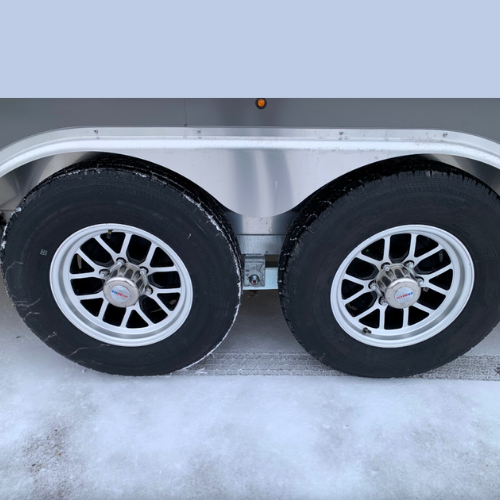
A trailer travelling salted roads five days a week faces different conditions from one used occasionally around a farm. Your maintenance estimates should reflect that difference.Steel can rust when protective coatings are compromised. Aluminum does not develop iron rust, but it can still experience corrosion, including around certain connections and contact points between dissimilar metals. Choosing aluminum does not eliminate the need for winter care.For either trailer, account for washing, inspections and attention to exposed components. Brakes, bearings, wiring, tyres and hardware still require maintenance.Look at your recent working year. How often did you tow through slush? Did the trailer sit outdoors between trips? How much time did washing and repairs take?Include your own labour when estimating costs. An afternoon spent treating corrosion still uses time, even when no repair invoice arrives.Build Your Adjustable Ownership-Cost Worksheet
Create two columns, one for the Enbeck aluminum model and another for the comparable steel trailer. Enter the following information for each, using Canadian dollars and the same ownership period.| Input | Your adjustable figure |
|---|---|
| Purchase and setup | Quoted price, required accessories and delivery |
| Ownership period | Expected years before selling or replacing |
| Towing frequency | Trips per year × average kilometres per trip |
| Winter exposure | Annual trips or kilometres on salted roads |
| Corrosion maintenance | Annual washing, treatments, repairs and labour |
| Routine maintenance | Annual servicing and component expenses |
| Downtime | Unavailable working days × realistic daily cost |
| Towing fuel | Annual kilometres × L/100 km ÷ 100 × fuel price |
| Financing | Total interest and fees during ownership |
| Resale | Estimated value when you sell |
Test Whether the Purchase Premium Pays Back
Here is a simplified example showing how the worksheet works.Illustrative scenario only: These invented figures are not McFarlane quotes, measured savings or resale forecasts.| Cost input | Aluminum | Steel |
|---|---|---|
| Purchase and setup | $9,000 | $7,000 |
| Annual corrosion maintenance | $150 | $400 |
| Annual downtime | $0 | $100 |
| Resale after eight years | $3,000 | $2,000 |
- Aluminum: 9,000+(150 × 8) − $3,000 = $7,200
- Steel: 7,000+(500 × 8) − $2,000 = $9,000