How to Set Up a Rocklyn Enclosed Trailer for Tools and Equipment
August 25, 2026 by Kyle McFarlane
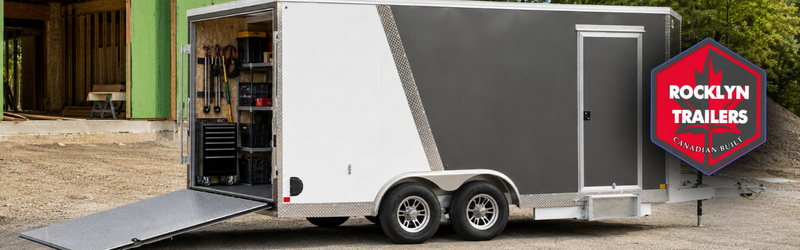
An enclosed trailer should do more than move tools from one location to another. With the right setup, it can become an organized mobile workspace that protects equipment and helps you stay productive.
Whether you work in construction, agriculture, landscaping, industrial services or recreational equipment hauling, your layout should reflect what you carry and how often you need to access it. Rocklyn manufactures Canadian-made aluminum enclosed trailers, including contractor models, with different sizes and configurations available through McFarlane Trailer Sales in New Hamburg.
How Do You Organize Tools in an Enclosed Trailer?
The best way to organize tools in an enclosed trailer is to keep the floor clear, give every item a secure location and arrange equipment based on how often it is used. Store frequently used tools close to the side or rear door, place small supplies on shelves, and secure heavy equipment to properly rated anchor points.
Before adding storage, consider:
- The size and weight of your equipment
- How tools will be loaded and unloaded
- Which items you use most often
- How much open floor space you need
- The trailer’s payload capacity and weight distribution
- Whether tools need protection from weather or theft
Planning around your workflow is more effective than installing shelves or racks wherever they happen to fit.
Start With the Right Enclosed Trailer
A good contractor trailer setup begins with the right trailer size and capacity. A trailer that is too small can quickly become crowded, while an oversized trailer may cost more and be harder to manoeuvre on tight jobsites.
Make a list of what you normally carry, including large equipment that must remain on the floor. Consider future needs as well. If your business is growing or you expect to add larger tools, a little extra room may be worthwhile.
You will also need to confirm that your tow vehicle is suitable for the trailer and its loaded weight. Storage systems, workbenches, batteries and racks all add weight before tools and materials are loaded. Check the trailer’s ratings, axle capacity and manufacturer requirements before finalizing the setup.
Divide the Interior Into Work Zones
Instead of treating the trailer as one open storage area, divide it into zones. This gives every item a logical place and makes it easier to maintain the system.
A practical enclosed-trailer layout might include:
- A frequently used tool zone near the side door
- Shelving for small tools, fasteners and supplies
- Floor space for generators, compressors or lawn equipment
- A section for long materials and ladders
- A secure area for higher-value equipment
- A clear centre aisle for safe movement
For many contractors, a U-shaped layout works well. Shelving can run along the side walls, with a workbench or cabinets positioned near the front. This leaves the centre open for movement and larger equipment.
However, a U-shaped design is not right for every user. Farmers, industrial crews and recreational users may need more uninterrupted floor space for machinery, ATVs or bulky equipment. In those cases, storage along one wall may be more practical.
Use Shelving Without Losing Floor Space
Enclosed trailer shelving is useful for cases, hand tools, parts and supplies, but it should not make the interior feel cramped.
Shallow shelving can provide storage while preserving room for equipment and a clear aisle. The ideal depth depends on the trailer width and what you plan to store. Before installation, place your largest floor-loaded item inside or measure its footprint to determine how much wall space is available.
Useful shelving features include:
- Raised edges that help prevent items from sliding
- Adjustable shelves that can accommodate different tools
- Positive-latching cabinet doors
- Divided bins for fasteners and small parts
- Labels that make supplies easier to return to the right place
Storage materials also contribute to the trailer’s total weight. Aluminum shelving may help limit added weight and resist corrosion, but every component should be installed according to the trailer manufacturer’s requirements.
Plan Storage for Ladders and Long Materials
Ladders, pipe, trim and other long materials can take up a large portion of the interior. A dedicated rack keeps these items from interfering with other tools.
An exterior roof rack can preserve interior space, but it also exposes equipment to weather and makes it more visible. Interior wall- or ceiling-mounted storage offers greater protection, provided it does not reduce headroom or create an unsafe obstruction.
The right option depends on:
- The length and weight of the materials
- How often are they needed
- Available interior clearance
- Theft and weather concerns
- The rack and trailer’s rated capacities
Do not assume that every enclosed trailer roof can support a loaded rack. Confirm structural requirements and load ratings before installing exterior or ceiling-mounted equipment.
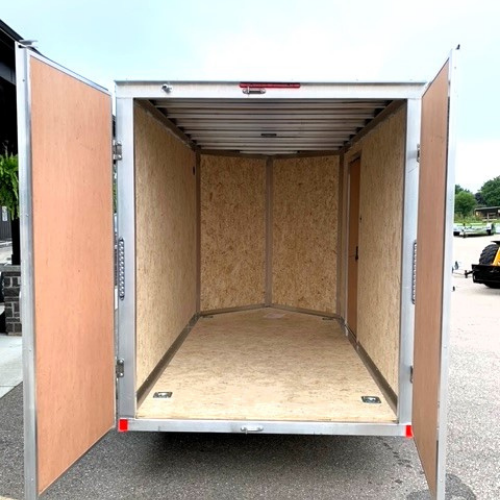
Match the Door Style to Your Loading Routine
The rear door affects how easily equipment moves in and out of the trailer.
A ramp door is often the practical choice for wheeled equipment such as tool chests, generators, mowers, motorcycles or ATVs. A spring-assist system can make the door easier to raise and lower, while a transition flap can provide a smoother path between the ramp and the ground.
Barn doors may be better when you want full rear access without lowering a ramp. They can also work well when materials are loaded from a dock or with appropriate material-handling equipment.
A side access door is valuable when you need to retrieve a tool without opening the rear of the trailer. Position frequently used equipment near this door so quick stops do not require unloading or climbing over other items.
Available door styles and upgrades vary by trailer, so confirm the chosen configuration before purchasing or modifying a Rocklyn trailer.
Improve Visibility With Interior Lighting
Good lighting makes it easier to find tools, read labels and move safely during early starts or late finishes.
LED fixtures positioned along the ceiling or upper walls can provide more even coverage than a single light in the centre. Motion-activated lighting near the entrance is also useful when your hands are full.
If you plan to charge batteries or operate corded equipment, discuss the appropriate electrical setup with a qualified professional. Depending on the intended use, this could include a dedicated battery, shore-power connection, outlets or a battery-maintenance system.
All wiring, batteries and electrical equipment should be properly protected and installed for mobile use.
Secure Tools and Manage Cargo Weight
Even an organized trailer is unsafe if tools can shift while travelling. Shelves, bins and cabinets should close securely, while heavier items need appropriately rated tie-down points.
E-track and recessed D-rings can provide flexible cargo-control options. However, their working load limits depend on the hardware, fasteners, mounting surface and installation method. Never rely on a generic rating or assume an anchor is suitable because it looks heavy-duty.
When loading the trailer:
- Keep heavy equipment low and properly secured
- Balance the load from side to side
- Maintain appropriate tongue weight
- Do not exceed the trailer or axle ratings
- Inspect straps, anchors and mounting points regularly
- Secure small items that could fall from shelves
Weight distribution affects towing stability, so it should be considered during the initial layout—not after shelves and equipment are installed.
Prepare for Ontario Work Conditions
An enclosed trailer used year-round in Ontario must handle heat, moisture, snow and road salt. Ventilation can help manage heat and stale air during warmer months, while good door seals help protect tools from rain and winter conditions.
Keep wet equipment away from items that can rust or become damaged by moisture. Removable floor mats, wall protection and easy-to-clean surfaces may also be useful for landscaping, agricultural or recreational equipment.
Security deserves attention as well. Quality locks, concealed storage and a consistent tool inventory can help protect valuable equipment. Avoid leaving expensive tools visible near windows or open doors when the trailer is unattended.
Build a Trailer Around the Way You Work
The best contractor trailer setup is not necessarily the one with the most shelves, racks or accessories. It is the one that fits your equipment, loading routine and working environment.
Start with the essentials: safe cargo control, clear access and storage for the tools you use most. Additional lighting, cabinets, racks and workspace features can be added where they provide a practical benefit.
McFarlane Trailer Sales in New Hamburg carries Rocklyn enclosed trailers in several sizes and configurations. The team can help you compare available trailers and determine which features suit your trade, agricultural operation, industrial work or recreational hauling needs. Explore Rocklyn trailers currently available from McFarlane Trailer Sales or contact the dealership to discuss your setup.