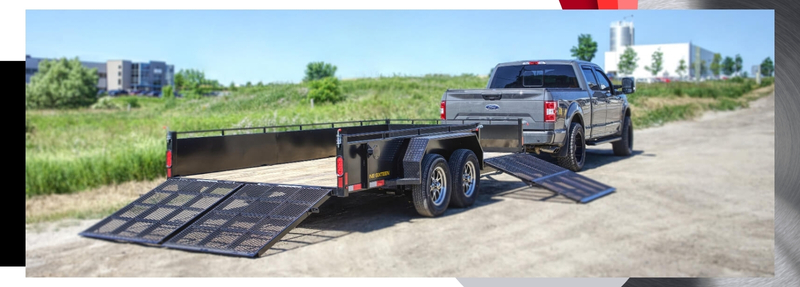
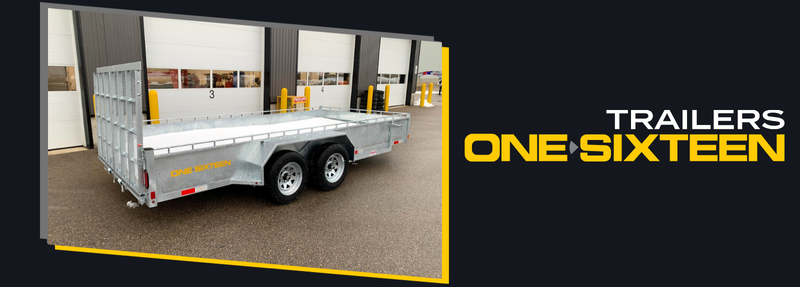
 Choosing the right axles, payload, and GVWR (Gross Vehicle Weight Rating) for your One Sixteen heavy-duty trailer might seem overwhelming at first, but it doesn’t have to be. You want a trailer that works as hard as you do, one that safely and reliably carries your load while staying within legal limits. The key is making informed decisions about your trailer’s setup.At McFarlane Trailer Sales in New Hamburg, Ontario, we specialize in helping you figure out the perfect configuration for your needs. Whether you're hauling construction equipment, farming supplies, or materials for your next big job, we can help you get it right.You need a trailer that balances strength and efficiency, and that's why understanding axles, payload capacity, and GVWR is crucial. Axles determine how much weight your trailer can safely carry and distribute. The payload refers to the cargo weight your trailer can handle without exceeding the GVWR, which includes the weight of the trailer itself. If you choose incorrectly, you risk damaging your equipment, breaking the law, or both. We’re here to make sure that doesn’t happen.This blog breaks everything down into simple, practical steps. You'll learn how to choose the perfect axle setup for your load, calculate your payload capacity, and meet GVWR requirements. By the end, you'll have all the knowledge you need to optimize your One Sixteen heavy-duty trailer, ensuring it’s ready for the job ahead. Let's get started!
How do axle ratings, payload capacity, and GVWR affect which One Sixteen trailer I should choose?
You need these numbers to keep your load safe. Axle ratings tell you how much weight the base frame can support. Payload capacity tells you exactly how much cargo you can put on the deck. GVWR gives you the total maximum weight allowed.You cannot just guess these numbers. If your load is heavier than your payload capacity, you will overload the axles. This causes extreme wear on your tires and brakes, which can lead to blowouts.You must look at your daily work needs. A small landscaping job needs a different setup than a big construction site. Picking the right ratings means your equipment lasts longer and stays safe.Master the Core Concepts of Towing
You need to know three basic terms before buying anything. These numbers keep you safe and legal on Canadian roads. We want to make sure you know exactly what they mean. Here are the core concepts you must remember:- GVWR (Gross Vehicle Weight Rating): This rating represents the maximum allowable weight of the vehicle or trailer when fully loaded. It includes the weight of the unit itself, passengers, cargo, and any additional equipment. Staying within this limit is crucial to prevent overloading, which can cause serious damage over time. Exceeding the GVWR can also lead to safety risks, such as reduced braking efficiency and increased wear and tear.
- Empty Weight (Curb Weight): This number measures the weight of the vehicle or trailer without any load. It accounts for the frame, deck, and any standard components but excludes cargo, passengers, or fuel. Understanding curb weight helps determine how much weight can be safely added within legal limits. It also supports accurate towing calculations, ensuring that the unit remains stable under load.
- Payload Capacity: This is the total weight of cargo that can be safely added to the vehicle or trailer. Calculated by subtracting the empty weight from the GVWR, this figure ensures every load remains within safe operating limits. Overloading past the payload capacity can strain the suspension and tires, leading to equipment failure. Knowing this number is essential for protecting both the equipment and those operating it.
Choose Your Axle Configurations
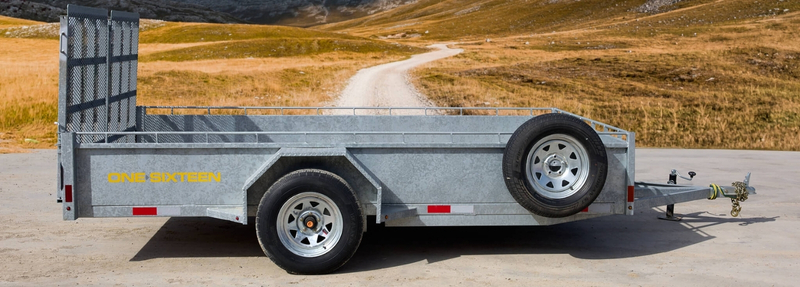
You have a few choices when it comes to axles. One-Sixteen heavy-duty options use a tandem setup, meaning they have two axles. This gives you better balance and higher weight limits. Here are the most common configurations:- Standard 3,500 lb Tandem Axles: Standard 3,500 lb tandem axles provide a combined GVWR of 7,000 lbs, making them a practical option for light-duty applications. This configuration is commonly used for hauling smaller loads such as zero-turn mowers, gardening equipment, or general-purpose materials. The lightweight design ensures ease of towing while maintaining structural durability. With a focus on efficiency, these axles are ideal for everyday tasks that do not require a heavy-duty setup.
- Upgraded 5,200 lb Tandem Axles: Upgraded 5,200 lb tandem axles offer a significantly increased GVWR of 10,400 lbs, making them suitable for medium-duty loads. This configuration is especially beneficial for transporting materials such as lumber, appliances, or machinery that require added capacity. The sturdy construction ensures consistent performance under moderate stress. These axles strike a balance between weight capacity and towing stability, making them a versatile choice for diverse hauling needs.
- Upgraded 7,000 lb Tandem Axles: Upgraded 7,000 lb tandem axles deliver a robust GVWR of 14,000 lbs, catering to the most demanding transportation needs. Designed for hauling extremely heavy loads, this setup is ideal for equipment such as skid steers, mini-excavators, or bulk gravel. The superior strength and high-performance design provide excellent durability in tough conditions. For contractors and professionals handling large-scale projects, this axle configuration offers maximum capacity and reliability.
Match the Load to Your Tow Vehicle
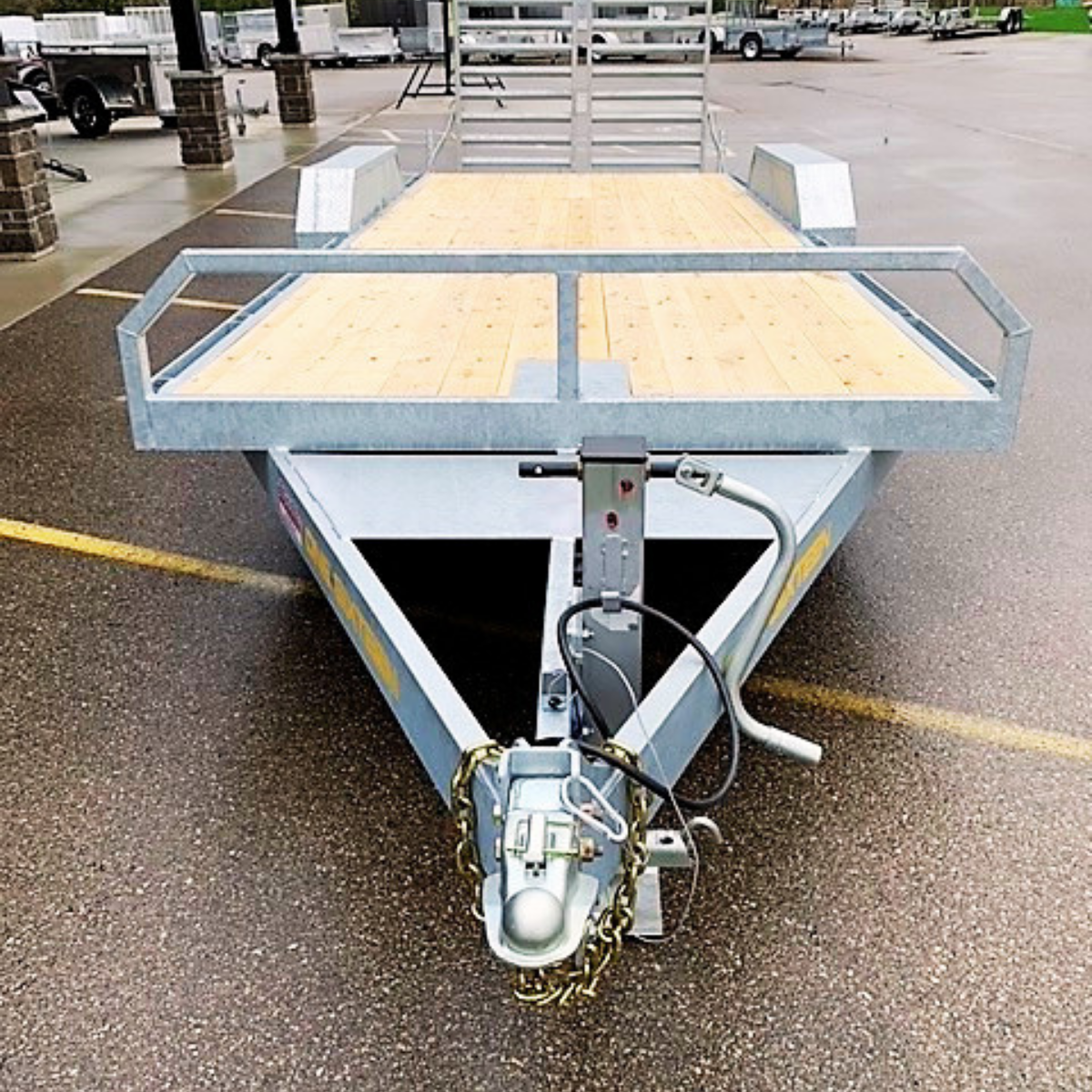
You cannot ignore your truck's limits. It is incredibly important not to choose a configuration that exceeds your tow vehicle’s capabilities. Your truck or SUV must be rated to tow the maximum GVWR, not just the empty weight.You will find your truck's towing capacity in its owner's manual. Compare this number to the GVWR of the unit you want to buy. If your truck can only pull 8,000 pounds, a 14,000-pound GVWR setup is too big.You risk engine damage and brake failure if you tow too much weight. You also put other drivers at risk. Always double-check your truck specs before you buy.Apply the 60/40 Loading Rule
You must load your cargo correctly every single time. No matter which payload or GVWR you choose, weight distribution is vital for safety. Unbalanced loads cause dangerous swaying on the highway. Follow these simple rules to load like a pro:- Front Heavy: Placing approximately 60 percent of the load's weight toward the front half of the deck is crucial. This keeps the majority of the weight near the hitch, which stabilizes the trailer while in motion. A front-heavy load reduces the risk of fishtailing, especially at higher speeds. Always measure and distribute weight carefully to ensure proper balance.
- Back Light: The remaining 40% of the load should be positioned in the rear half of the deck. Distributing the weight this way prevents the back of the trailer from becoming too heavy, which could cause unsafe driving conditions. A lighter back end helps maintain control when braking or turning. This balance protects both the vehicle hauling the load and other drivers on the road.
- Secure Tightly: Cargo should always be fastened with durable straps and secured using welded D-rings for extra stability. Strong, high-quality fasteners prevent loads from shifting during transport, which can lead to accidents. Double-check all tie-downs before driving to ensure they are tight and secure. Failing to properly fasten cargo can result in damage to the load and unsafe conditions for everyone nearby.