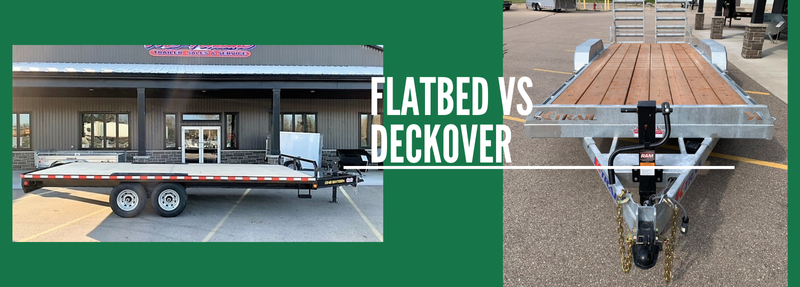
 You need to move heavy equipment, but which type should you choose? The deckover vs flatbed trailer comparison can seem confusing at first.The truth is, both options work great for hauling, but each has its own strengths. Flatbed trailers sit lower and make loading easier, while deckover trailers give you more space and width. When looking for the best trailer for hauling equipment in Ontario, you need to think about what you'll be moving and where you'll be going.In this blog, we'll break down flatbed trailer types explained in simple terms so you can make the right choice. Both flatbed trailers vs. deckover trailers have their place, and understanding the differences helps you pick what works best for your needs.At McFarlane Trailers in New Hamburg, Ontario, we help customers choose the perfect option for their hauling jobs every day.
What Are Flatbed Trailers?
Flatbed trailers have a simple design that makes them popular with many haulers. The deck sits between the wheels, which keeps the platform close to the ground. You'll see these on roads everywhere because they work well for so many different jobs.The low height is the biggest advantage of flatbed trailers. You can load equipment without needing long ramps or special tools. This makes them perfect when you're working in tight spaces or don't have a lot of room to manoeuvre.Key Features of Flatbed Trailers
- Low deck height for easy loading
- The deck sits between the wheel wells
- Lightweight design
- Lower centre of gravity
- Simple, affordable construction
- Wide availability of sizes
What Are Deckover Trailers?
Deckover trailers take a different approach. The deck sits above the wheels instead of between them. This design creates a wider, flatter surface that gives you more room to work with. The platform extends over the wheel wells, which means no obstructions on your loading area.You'll find deckover trailers especially useful when you need to move wide or bulky equipment. The extra width and clear deck space make loading much easier in many situations.Key Features of Deckover Trailers
- Deck sits above the wheels
- Wider loading platform
- No wheel well obstructions
- Higher ground clearance
- More deck space overall
- Better for oversized loads
When to Choose Flatbed Trailers
Flatbed trailers work best in specific situations. Understanding when to use them helps you make smart choices for your hauling needs. Here are some of the perfect jobs for flatbed trailers:- Vehicle Transport: Cars, trucks, and ATVs fit perfectly on flatbed trailers. The low deck makes driving vehicles on and off much easier and safer.
- Construction Materials: Lumber, steel beams, and other building supplies work well on flatbeds. You can load from the sides without wheel wells getting in the way.
- Landscaping Equipment: Riding mowers, small tractors, and other lawn equipment load easily on the low deck.
- Farm Equipment: Smaller agricultural machinery benefits from the easy loading that flatbeds provide.
Best Conditions for Flatbeds
- Smooth roads and highways
- Easy loading areas with good access
- Weight-sensitive situations
- Budget-conscious projects
- Regular highway driving
When to Choose Deckover Trailers
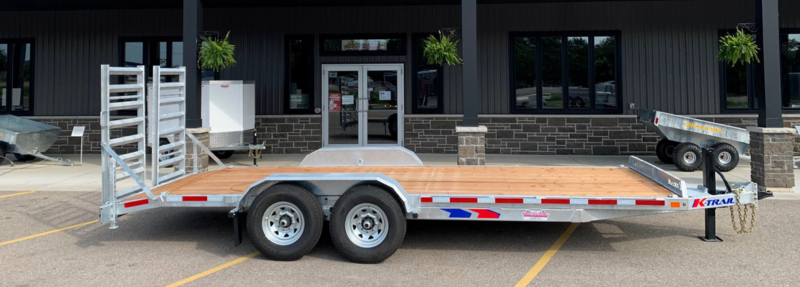
Deckover trailers shine when you face specific challenges that flatbeds can't handle as well. The extra width and height come in handy for particular types of hauling.What are the perfect jobs for deckover trailers?- Wide Equipment: Bulldozers, excavators, and other oversized machinery need the extra width that deckovers provide.
- Forklift Loading: The clear deck surface makes it easy to use forklifts for loading pallets and heavy materials.
- Rough Terrain: The higher ground clearance helps when you're driving on construction sites or unpaved areas.
- Bulk Materials: Large, awkward loads fit better on the wider platform without wheel wells in the way.
Best Conditions for Deckovers
- Off-road or rough terrain driving
- Oversized load requirements
- Forklift or crane loading
- Commercial hauling operations
- Construction site access needs
Comparing Load Capacity and Size
Both trailer types come in different sizes, but they handle weight differently. Understanding these differences helps you pick the right option.Flatbed Capacity
Flatbed trailers typically handle loads from 3,500 pounds up to 40,000 pounds or more. The exact capacity depends on the size and number of axles. Single-axle versions work well for lighter loads, while tandem-axle models handle heavier equipment.Deckover Capacity
Deckover trailers usually start at higher weight ratings because of their stronger construction. Most begin around 7,000 pounds and go up to 50,000 pounds or more. The wider deck distributes weight better across the platform.Loading and Safety Tips
No matter which type you choose, safe loading practices protect your equipment and other drivers on the road.Loading Best Practices
- Always check weight limits before loading
- Distribute weight evenly across the deck
- Secure all loads with proper tie-downs
- Use wheel chocks for vehicles
- Inspect the trailer before each trip