Frontier Livestock Trailers: Stock Trailer Size Guide for Cattle, Sheep, Goats, and Pigs
June 3, 2026 by Kyle McFarlane
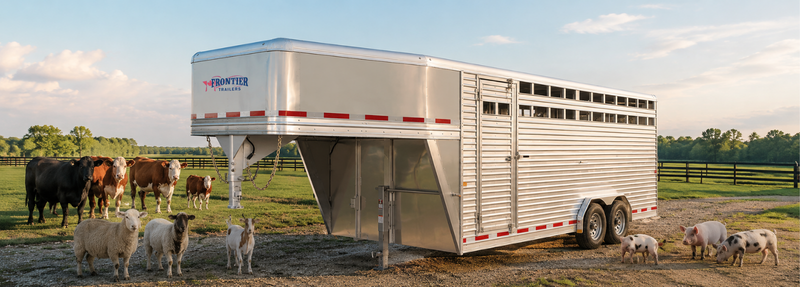
Choosing the right livestock trailer size is one of the most important decisions farmers and ranchers can make when transporting animals. Whether you are hauling cattle to market, moving goats between pastures, or transporting pigs for breeding or sale, the trailer you choose affects animal safety, comfort, and efficiency on the road. A trailer that is too small can overcrowd livestock and increase stress, while one that is too large may allow animals to shift dangerously during transport.
Frontier Livestock Trailers available at McFarlane Trailer Sales are designed with durability, ventilation, and livestock handling in mind. Their lightweight aluminum construction and practical layouts make them a reliable option for Canadian farms of all sizes.
How Many Cows Can Fit in a Stock Trailer?
The number of cows that can fit in a stock trailer depends on trailer length, cattle weight, and hauling distance. A standard 16-foot stock trailer can usually haul 4–6 adult cattle comfortably, while a 24-foot trailer may carry 8–10 head. Proper spacing is essential to reduce stress and injury during transport. Frontier livestock trailers are designed to maximize safe hauling capacity while maintaining excellent airflow and animal comfort on the road.
Why Trailer Size Matters
Livestock trailers are not one-size-fits-all. Different animals require varying amounts of space, and the right trailer size depends on the type and number of animals being transported.
Overcrowding can lead to:
- Increased stress and overheating
- Slipping and injuries
- Reduced airflow and ventilation
- Weight loss during longer hauls
At the same time, too much empty space can also create problems. Animals may shift during transport, which can affect trailer balance and increase the risk of injury. This is why choosing a trailer with the proper dimensions and divider options is so important.
Frontier Livestock Trailers are built with practical livestock handling features, including:
- Durable aluminium construction
- Ventilation systems for improved airflow
- Interior dividers and gates
- Easy-loading rear doors
- Lightweight towing design
These features help make hauling safer and more efficient for both livestock and operators. Choosing the right trailer size also helps improve fuel efficiency, reduces unnecessary wear on the towing vehicle, and creates a smoother hauling experience overall.
Stock Trailer Sizing for Cattle
Cattle require the most trailer space out of the common livestock species. The amount of room needed depends largely on animal weight.
As a general guide:
- Calves may require 8–10 square feet each
- Mature cows typically need 16–20 square feet
- Bulls and larger beef cattle may require even more space
For smaller operations, a 12–16-foot bumper pull trailer may be enough for transporting a few animals locally. Larger herds often benefit from 20–24-foot gooseneck trailers, which offer greater stability and capacity.
Gooseneck trailers are especially useful for:
- Long-distance hauling
- Larger cattle loads
- Improved towing control
- Better weight distribution
Frontier trailers are popular for cattle hauling because their aluminum construction reduces overall trailer weight without sacrificing strength. This can improve fuel efficiency while still providing a durable solution for heavy livestock transport. Producers hauling cattle regularly also benefit from interior dividers that help keep animals secure and evenly distributed throughout the trailer.
Choosing the Right Trailer for Sheep and Goats

Sheep an
d goats require less space than cattle, but ventilation and security are especially important. These animals can become stressed quickly in hot or overcrowded conditions.
A smaller trailer may work well for hobby farms or small flocks, while larger operations may prefer trailers with multiple compartments to separate animals during transport.
Important features for sheep and goat transport include:
- Secure latches and escape-proof gates
- Non-slip flooring
- Proper ventilation
- Easy-to-clean interiors
Frontier Livestock Trailers offer smooth aluminum interiors that help reduce the chance of cuts or injuries. Their lightweight design also makes towing easier for smaller trucks and SUVs commonly used on mixed farms.
For many producers, the ability to customize interior layouts with dividers is another major advantage. Separating animals by size or species can improve safety and reduce stress during travel. Proper ventilation is equally important, especially during summer hauling, as sheep and goats are sensitive to heat buildup in enclosed spaces.
Stock Trailer Considerations for Pigs
Transporting pigs requires careful attention to ventilation and temperature control. Pigs are highly sensitive to heat and can become stressed very quickly during transport.
When hauling pigs:
- Avoid overcrowding
- Ensure proper airflow throughout the trailer
- Use non-slip flooring to prevent falls
- Separate aggressive animals when possible
Smaller pig operations may only need a compact bumper pull trailer, while commercial producers often require larger multi-compartment setups.
Because pigs are heavier than many people realize, trailer weight ratings also matter. It is important to stay within the trailer’s Gross Vehicle Weight Rating (GVWR) and ensure the towing vehicle is capable of safely handling the load.
Frontier trailers are designed to handle heavier livestock while maintaining proper ventilation and structural strength, making them a practical option for pig producers. Features such as wide rear doors and low-stress loading areas can also help simplify handling during loading and unloading.
Bumper Pull or Gooseneck: Which Is Better?
The choice between a bumper pull and a gooseneck trailer often comes down to herd size, towing preferences, and hauling frequency. Both styles have advantages, and selecting the right option depends on how the trailer will be used.
Bumper Pull Trailers
Bumper pull trailers are a popular option for smaller farms and hobby operations. They attach directly to a standard hitch receiver, making them easier for many drivers to tow and manoeuvre.
Bumper pull trailers are ideal for:
- Smaller livestock loads
- Short-distance hauling
- Occasional use
- Easier storage when not in use
They are often more affordable and can work well for transporting sheep, goats, pigs, or a few head of cattle. Their compact design also makes them easier to park and store in tighter spaces.
Gooseneck Trailers
Gooseneck trailers connect to a hitch mounted in the bed of a pickup truck, which provides improved stability and weight distribution. These trailers are commonly preferred by larger livestock operations and producers hauling animals regularly.
Benefits of gooseneck trailers include:
- Higher hauling capacity
- Improved towing stability
- Better handling on highways
- Reduced trailer sway
- More interior space for livestock
For longer trips or heavier cattle loads, gooseneck trailers often provide a smoother and safer hauling experience. They can also include additional storage space in the neck area for equipment and supplies.
McFarlane Trailer Sales offers Frontier Livestock Trailers in both bumper pull and gooseneck configurations, giving producers the flexibility to choose a trailer that matches their hauling needs and towing setup.
Features To Look For in a Livestock Trailer
Not all livestock trailers are built the same. When comparing options, producers should look for features that improve safety, durability, and ease of use.
Key features include:
- Aluminium construction for rust resistance and lighter towing
- Ventilation openings for airflow
- Interior dividers for animal separation
- Non-slip flooring for improved footing
- Easy-loading ramps and gates
- Durable suspension systems for smoother transport
Aluminum trailers have become increasingly popular because they resist corrosion and typically require less maintenance than steel trailers. This can be especially valuable in Canadian climates where moisture, road salt, and changing temperatures can affect trailer longevity.
How To Avoid Overloading Your Trailer
One of the most common hauling mistakes producers make is overloading the trailer. Exceeding the trailer’s weight capacity can negatively impact braking, steering, tire wear, and overall road safety. It can also place unnecessary stress on livestock, especially during longer trips.
Overloaded trailers may:
- Increase stopping distances
- Cause trailer sway
- Put excess strain on axles and tires
- Lead to uneven weight distribution
- Increase the risk of accidents or breakdowns
To avoid overloading, producers should always check the trailer’s Gross Vehicle Weight Rating (GVWR) and compare it to the combined weight of the livestock, equipment, feed, and supplies being transported.
Helpful tips include:
- Weigh livestock before transport when possible
- Load heavier animals evenly throughout the trailer
- Avoid placing too much weight near the rear door
- Check tire pressure regularly
- Ensure the towing vehicle is rated for the load
Using interior dividers can also help distribute weight more evenly and prevent animals from crowding one side of the trailer during transport. Frontier Livestock Trailers are designed with durable frames and balanced layouts to help producers haul livestock safely and efficiently.
Choosing the Right Frontier Livestock Trailer for Your Farm
Selecting the right stock trailer size is essential for safely transporting cattle, sheep, goats, and pigs. The proper trailer improves animal comfort, reduces stress during travel, and makes hauling more efficient for producers.
Frontier Livestock Trailers available at McFarlane Trailer Sales are built with practical livestock handling features, durable aluminum construction, and layouts designed for real farm use. Whether you need a compact bumper pull trailer or a larger gooseneck setup, choosing the right trailer size can help protect both your livestock and your investment for years to come.