Can a Trailer Pay for Itself Before Spring? A One Sixteen Work Plan for Firewood, Snow and Property-Cleanup Jobs
November 25, 2026 by Kyle McFarlane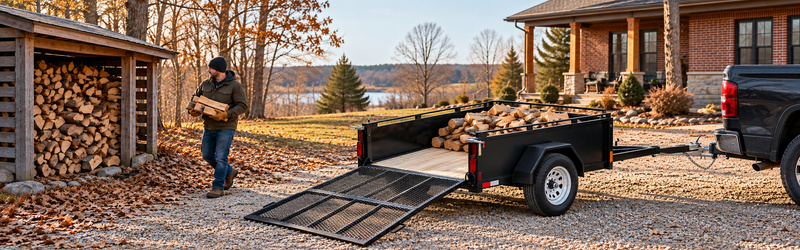
When the lawn equipment gets parked for winter, your trailer does not necessarily have to sit beside it. Firewood deliveries, storm-debris pickups and transporting snow equipment can keep a useful hauling setup working through Ontario’s colder months.
But can those jobs cover the cost of a One Sixteen trailer before spring? That depends on customer demand, your expenses and how much work you can realistically complete. A practical service plan helps landscapers, farmers, rural homeowners and new business owners explore the possibilities without mistaking revenue for profit.
What winter services can I offer with a utility trailer?
A utility trailer can support firewood delivery, storm-debris hauling, snow-equipment transport and salting routes. Suitable services depend on trailer payload, deck space, loading arrangements, tow-vehicle limits and your equipment. Start with work you can perform safely and price realistically, then compare expected job contribution with the trailer’s purchase and operating costs.
Choose Winter Work That Fits Your Customers
The most practical winter services often build on equipment, skills and customer relationships you already have.
A landscaper might offer debris collection to existing property-maintenance customers. A farmer with suitable firewood stock might consider local deliveries. Someone equipped with snowblowers and hand tools could use a trailer to support a small property-care route.
Consider these service models:
- Firewood delivery: Deliver your own stock or transport orders for a supplier.
- Storm cleanup: Collect manageable fallen branches and property debris.
- Equipment transport: Move suitable snowblowers, tools and compact equipment.
- Salting support: Carry bagged de-icer and portable spreading equipment.
Keep the service scope clear. Transporting snow-removal equipment is different from hauling snow, and debris pickup does not automatically include hazardous tree work.
Before buying, ask potential customers what they need, how often and where. Interest is useful, but it is not the same as confirmed bookings.
Match the Service to a One Sixteen Configuration
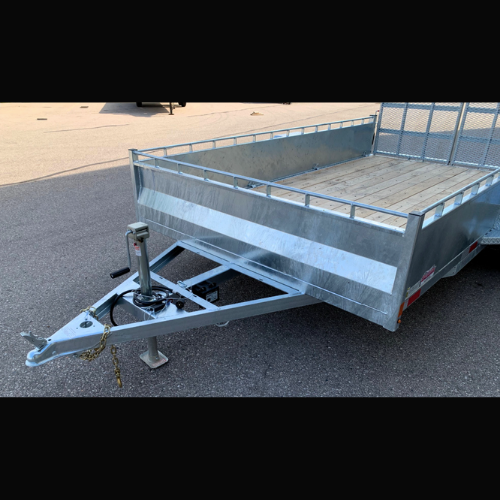
One Sixteen offers single-axle and tandem utility configurations, including painted and galvanised options. Choosing between them starts with the complete load and how you will load, secure and unload it.
Use this table to guide the comparison:
| Winter service | Configuration to assess | Important checks |
|---|---|---|
| Smaller firewood deliveries | Single-axle utility with solid sides | Actual wood weight, containment and unloading |
| Larger firewood deliveries | Tandem utility with suitable payload | Loaded weight, truck limits and delivery access |
| Storm-debris pickup | Utility with suitable sides and secured cover | Containment, deck space and disposal access |
| Snow-equipment transport | Ramp-equipped single-axle or tandem utility | Machine dimensions, ramp rating and securement |
| Salting-route support | Utility carrying secured bags and portable equipment | Concentrated weight and moisture protection |
These are starting points, not capacity approvals. Confirm the specifications of the actual model.
Firewood and bagged de-icer can use available payload before the deck looks full. Include tools, equipment, containers and accessories in your calculations.
An open utility trailer also requires unloading labour and weather protection where needed. It does not provide hydraulic dumping or enclosed storage. Any permanently mounted spreader or other modification needs appropriate manufacturer approval.
Build Packages Around the Entire Job
When exploring ways to make money with a utility trailer, price the whole service rather than just the drive.
A firewood delivery could include transport and unloading at an accessible location, with stacking priced separately. A storm-cleanup package could define accepted materials, collection limits and disposal charges.
For equipment transport, establish pickup and delivery locations, loading responsibilities and access requirements. For salting support, define the areas covered and materials included.
Every quote should account for:
- Travel and loading time
- Labour at the property
- Materials and equipment use
- Disposal or delivery charges
- Cleanup and return travel
Grouping nearby customers may reduce travel, but allow enough time for difficult access and winter conditions.
Rural homeowners should also separate personal usefulness from business income. A trailer that helps around your own property provides value, but those household tasks do not generate cash to recover its purchase price.
Calculate What Paying for Itself Would Require
Start by defining the goal. Recovering the trailer’s initial investment is different from covering every business expense.
A simple planning calculation is:
Job contribution = service revenue − direct job costs
Jobs needed to recover the investment = trailer and setup cost ÷ contribution per job
Direct costs include materials, fuel, disposal, job-related equipment expenses and labour, including your own time.
Hypothetical example only: Suppose a trailer and its initial setup cost $5,000. A completed service brings in $250, with $150 in direct costs. That leaves $100 towards the investment and overhead.
At that contribution, recovering $5,000 requires 50 completed jobs. With ten working weeks available, that means averaging five jobs per week.
These figures are invented planning inputs, not trailer quotes, recommended prices or income forecasts. Insurance, financing, maintenance and other overhead must also be covered, so 50 jobs would not necessarily represent full business break-even.
Test a quieter season and higher costs. If the plan only works with perfect weather and every enquiry becoming a booking, revise it.
Prepare the Trailer for Ontario Winter Routes
A utility trailer for snow-removal business support needs to fit both the load and the working conditions.
Before taking bookings, inspect tyres, lights, bearings, the coupler, safety chains and securement equipment. Check brakes and the breakaway system where fitted.
Follow manufacturer guidance for cleaning and corrosion care. Galvanised components still need attention, particularly after salted-road travel.
Protect moisture-sensitive materials and tools. Plan for slippery loading surfaces, snow-covered entrances and limited unloading space.
Confirm that your insurance and any requirements applicable to the services are addressed before starting. Then review whether your truck, equipment and available hours can support the proposed route.
Frequently Asked Questions
Can a utility trailer really pay for itself in one winter?
It is possible, but no service plan can guarantee that outcome. You need enough completed jobs, priced to cover direct costs and contribute towards the trailer investment and overhead. Weather, cancellations, travel time and unexpected repairs can change the result. Calculate several scenarios using realistic customer demand, and distinguish recovering the purchase price from achieving full business profitability before spring arrives in Ontario.
What size trailer do I need for firewood deliveries?
Start with the quantity you intend to deliver and the actual weight of that wood, rather than choosing by deck dimensions alone. Species and moisture content affect weight, while sides and securement arrangements affect containment. Check the specific trailer’s payload, your tow vehicle’s limits and delivery access. Also consider how you will unload, because an open utility trailer requires a practical unloading plan.
Can I use a utility trailer for a snow-removal business?
Yes, a suitable utility trailer can transport snowblowers, portable spreaders, shovels and secured de-icing materials between properties. Choose a configuration with adequate payload, deck space, ramp capacity and tie-down arrangements for the complete load. This support role differs from hauling bulk snow or operating a mounted spreader. Confirm equipment compatibility, protect moisture-sensitive supplies and assess safe loading conditions before building your winter service route.
Is a single-axle or tandem utility trailer better for winter work?
The better choice depends on your actual loads, required deck space, tow vehicle and access conditions. A single-axle model may suit smaller equipment or deliveries, while a suitable tandem model may accommodate a different workload. Axle count alone does not establish usable payload or suitability. Compare specific ratings, brakes, ramps and dimensions, then assess the complete loaded combination before deciding which configuration fits best.
What costs should I include when pricing winter trailer jobs?
Include materials, labour, fuel, travel time, loading, unloading, disposal charges and job-related equipment wear. Count your own working time even if you do not pay yourself separately for each job. Pricing must also contribute towards overhead such as insurance, financing, maintenance and administration. Allow for cancellations and unproductive travel, and review actual completed-job costs regularly rather than relying only on your original seasonal estimates.
Build the Work Plan Before Buying
A trailer can support useful winter services, but earning back its cost starts with suitable jobs and realistic numbers.
Bring your winter service plan, expected loads and tow-vehicle details to McFarlane Trailer Sales in New Hamburg. Compare One Sixteen configurations suited to your firewood deliveries, cleanup jobs, equipment transport or salting-support work.