How AgHaul Livestock Trailer Layouts Improve Animal Safety
August 4, 2026 by Kyle McFarlane
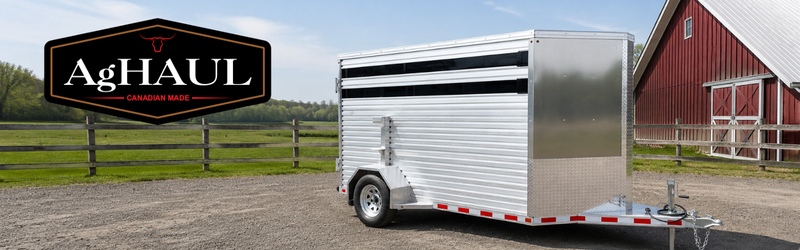
A livestock trailer does more than move animals from one location to another. Its layout affects how easily livestock can load, balance, breathe and remain separated during the trip.
Animals constantly adjust their footing as a trailer accelerates, turns and brakes. If the trailer is overcrowded, poorly ventilated or difficult to load, the risk of stress, falls, and injuries can increase.
That is why trailer layout should be considered alongside towing capacity, durability and price.
AgHaul livestock trailers are built in Ontario for Canadian farms, rural roads and demanding hauling conditions. When choosing a trailer, farmers and commercial operators should look closely at five key areas: trailer size, ventilation, divider gates, flooring and loading access.
Choose the Right Trailer Size for the Load
The right trailer size depends on more than the number of animals being transported. Their species, size, weight, physical condition and familiarity with one another can all affect how much room they require.
Overloading limits the animals’ ability to brace themselves and can increase crowding, trampling and heat buildup. However, placing a small load in a large open trailer can also create problems. Too much unused space may allow animals to slide or be thrown off balance during sudden turns and stops.
Before choosing a trailer, consider:
- The livestock species you haul most often
- The average and maximum size of your loads
- Whether you regularly transport calves or mature animals
- How often you move mixed groups
- The length and condition of your usual routes
- Seasonal weather and ventilation needs
Divider gates can help reduce open space when carrying smaller loads, but the trailer should still be properly sized for the work your operation handles most often.
There is no single capacity figure that applies to every trailer or every herd. Loading decisions should account for the animals, trailer dimensions, weather and journey conditions.
Ventilation Helps Control Heat and Moisture
Several animals in a confined space can quickly produce heat, moisture and stale air. Proper ventilation helps remove that buildup while providing a more comfortable environment during transport.
AgHaul livestock trailers use an open-sided design to support passive airflow. Depending on the model and configuration, adjustable closures can provide additional protection during cold or wet weather.
Ventilation needs will vary by season and species.
Pigs are particularly sensitive to heat and may require greater airflow during warm weather. Cattle with heavier winter coats may need more protection from wind during cold-weather transportation. Young, compromised or recently handled animals may also require additional care.
Drivers should check conditions inside the trailer during stops and adjust available ventilation when temperatures change. Openings should provide airflow without exposing animals to excessive wind, rain, snow or road debris.
Canadian guidance also recommends taking additional precautions during extreme weather. Cold-weather measures may include adjusting loading density, using suitable bedding or insulation and increasing protection from the elements. (Canadian Food Inspection Agency)
Divider Gates Provide Better Load Control
Divider gates allow the trailer interior to be divided into smaller sections. This helps control animal movement and makes the trailer more adaptable for different loads.
A well-planned divider system can help:
- Keep large and small animals separated
- Prevent mature animals from crowding calves or smaller livestock
- Separate unfamiliar or incompatible groups
- Isolate an animal that becomes aggressive or distressed
- Reduce excessive open space around a partial load
- Control movement during loading and unloading
Articulating or adjustable divider gates provide additional flexibility. The operator can change the compartment sizes based on the animals being moved that day rather than working with one fixed interior layout.
Dividers must also be strong enough for the size and weight of the livestock. Gates, hinges and latches should be inspected regularly for loose hardware, damage or wear.
A divider is only useful when it remains secure under pressure.
Non-Slip Flooring Supports Stable Footing
Livestock need dependable traction throughout the trip. Smooth, worn or contaminated flooring can become slippery, especially when moisture, mud, manure or bedding accumulates.
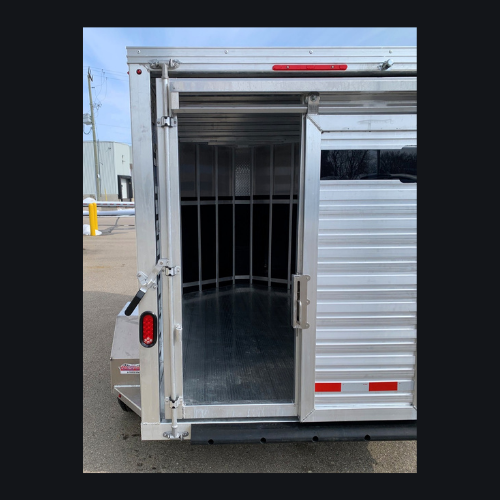
AgHaul models available through McFarlane Trailer Sales may include heavy-duty extruded aluminum flooring. Aluminum provides a durable base that resists rot and is well suited to regular farm use.
Floor traction can be improved further with properly fitted rubber mats or other livestock-appropriate surfaces. Bedding may also be used where suitable for the species, temperature and journey.
Regardless of the floor material, it should be:
- Structurally sound
- Easy to inspect
- Suitable for the animals being transported
- Free from sharp edges or damaged sections
- Maintained to provide reliable traction
- Cleaned regularly to control buildup and corrosion
Operators should inspect the floor before loading. Check for loose mats, worn surfaces, protruding fasteners and soft or damaged areas.
Good flooring will not replace careful driving, but it gives animals a more secure surface on which to balance.
Loading Access Can Reduce Stress and Delays
Many transportation problems begin before the trailer starts moving. A narrow, steep, unstable or poorly positioned entrance can cause animals to stop, turn back or crowd together.
Good loading access creates a clear and controlled path into the trailer.
Depending on the AgHaul model, useful access features may include rear swing doors, calf gate sliders and side-access doors. These features can give handlers more control over different animals and loading situations.
Rear swing doors
Wide rear access can make it easier to move groups into and out of the trailer. Secure slam latches allow the door to be closed promptly once loading is complete.
Sliding calf gates
A sliding calf gate provides a smaller, more controlled opening for calves, lambs or other smaller livestock. It can help prevent several animals from pushing through the doorway at once.
Side-access doors
A side door gives handlers another way to access the trailer without opening the full rear entrance. It may also help when checking compartments or managing animals during loading.
Loading areas should be well lit and free of avoidable distractions. Sudden shadows, loose equipment, loud noises and unstable footing can cause animals to hesitate.
A calm, direct loading process is safer for the livestock and the people handling them.
Match the Layout to Your Operation
The best livestock trailer is not necessarily the largest model or the one with the longest feature list. It is the trailer that fits the work your farm or business performs regularly.
Start with the animals you transport most often.
A cow-calf operation may place a high priority on divider flexibility and calf access. A hog operation may focus more heavily on airflow and temperature management. Commercial haulers may need a layout that can be adjusted for several species and load sizes.
Consider the following questions:
- What species do you haul?
- What is the largest load you move regularly?
- Do you transport mixed groups?
- How far do you normally travel?
- Will the trailer be used throughout the winter?
- Do you frequently load at different barns, yards or sale facilities?
- How much flexibility will you need from the divider system?
- What trailer width and height will your animals require?
The answers will help determine the right trailer length, width, floor, gate configuration and access points.
Livestock Transportation in Ontario
Ontario operators deal with humid summers, freezing winters, gravel concessions, muddy yards and long distances between farms, sale barns and processing facilities. A livestock trailer must be able to handle those conditions without becoming difficult to use or maintain.
Weather protection and ventilation should be adjusted throughout the year. Flooring and gates should be checked frequently, particularly after winter exposure to moisture, salt and road debris.
Transporters must also understand the humane transportation requirements that apply to their operation. Part XII of Canada’s Health of Animals Regulations covers animals transported into, within and out of Canada.
Anyone involved in loading, unloading or transporting livestock is responsible for assessing whether animals are fit for the intended trip. Unfit animals must not be transported, while compromised animals may only be moved under the special conditions permitted by the regulations.
The trailer is one part of that responsibility. Animal condition, weather, trip planning, loading density, handling and driving practices also affect transportation safety.
Frequently Asked Questions
How do I choose the right size livestock trailer?
Base the decision on the species, weight and number of animals you normally transport. Also consider whether you haul mixed groups, how long your trips are and how much compartment flexibility you need. McFarlane Trailer Sales can help compare available trailer sizes and payload capacities.
Can different livestock species travel in the same trailer?
They may be transported in the same trailer when they can be safely separated and all applicable animal-transport requirements are followed. Strong divider gates can help keep animals of different sizes, species or temperaments apart.
What flooring is best for a livestock trailer?
The floor should be strong, durable and capable of providing secure footing. Heavy-duty extruded aluminum is a durable option, while rubber mats or suitable bedding may provide additional traction and comfort. The entire floor system should be inspected and cleaned regularly.
How often should trailer ventilation be checked?
Check ventilation before loading and during stops. Conditions may change significantly between a cool morning and a hot afternoon. Ventilation should also be adjusted for the species, the number of animals, and the current weather.
Can one livestock trailer handle both cattle and pigs?
Many trailers can accommodate more than one species when properly configured. Pigs generally require careful management of heat and ventilation, while mature cattle require flooring, gates, and dividers suited to their weight and strength.
What should I inspect before loading livestock?
Inspect the tires, wheels, hitch, lights, brakes, floor, gates, latches, ventilation openings and interior surfaces. Remove sharp objects and confirm that all doors and dividers operate securely before animals enter the trailer.
Find an AgHaul Livestock Trailer at McFarlane Trailer Sales
Trailer layout directly affects how livestock load, balance and travel. Proper sizing limits crowding and excessive movement. Ventilation helps manage heat and moisture. Divider gates provide better load control, while secure flooring and practical access points support safer handling.
AgHaul builds aluminum livestock trailers for demanding Canadian farm and commercial applications. Available models offer practical configurations for cattle, calves, sheep, goats, pigs and other livestock.
McFarlane Trailer Sales in New Hamburg can help you compare AgHaul trailer sizes, payloads, flooring, doors and gate configurations. Our team understands Ontario farms, rural road conditions and the demands placed on livestock equipment.
Contact McFarlane Trailer Sales to explore available AgHaul livestock trailers and find a layout that fits your operation.