How to Load and Secure Equipment in an Enclosed Trailer
April 21, 2026 by Kyle McFarlane
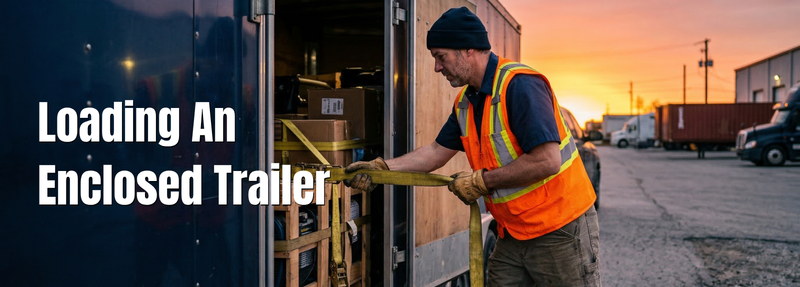
Loading and securing equipment in an enclosed trailer the right way keeps your gear safe, protects other drivers on the road, and helps you avoid costly damage. The process comes down to a few key principles: distribute your weight properly (about 60% toward the front and 40% toward the rear), place heavy items low and centred, push cargo against the front wall, and strap everything down using heavy-duty tie-down straps connected to solid anchor points like E-tracks or D-rings.
It sounds simple, but a lot of people skip steps, and that’s when things go wrong. Shifting cargo, blown tyres from overloading, and even rollovers can all happen when a load isn’t secured correctly.
At McFarlane Trailers in New Hamburg, Ontario, we work with customers every day who want to get more out of their enclosed trailers, such as Enbeck, Pace, and Rocklyn. That starts with knowing how to load them properly.
In this blog, we’ll walk you through exactly how to load and secure equipment in an enclosed trailer, step by step. Whether you’re hauling tools, machinery, or landscaping gear, these tips will help you do it right every time.
How Do You Secure Items in an Enclosed Trailer?
You secure items in an enclosed trailer by attaching heavy-duty ratchet straps to fixed anchor points like E-track rails or D-ring tie-downs and pulling them tight over or around your cargo. The goal is to stop everything from shifting forward, backward, or side to side while you’re moving.
Beyond the straps, you also need to think about where you place items before you strap them down. Heavy equipment should sit low on the floor and be pushed forward against the front wall. Lighter items go on top or toward the rear. When cargo is loaded and positioned correctly first, your straps do their job much more effectively.
Start with the Right Equipment
Before you load anything, make sure you have the right tools for the job. Using the wrong gear or worn-out gear can turn a simple haul into a dangerous one.
Here’s what you’ll want to have on hand before you start loading:
- Ratchet Straps: Heavy-duty ratchet straps are the most reliable option for securing equipment. Choose straps with a working load limit rated for at least the weight of your cargo. Inspect them before every use and replace any that show signs of fraying or wear.
- E-Track Rails or D-Rings: These are your anchor points. E-track systems run along the walls or floor of your enclosed unit and let you attach straps at multiple positions. D-rings are bolted to the floor and work well for heavier equipment.
- Wheel Chocks: If you’re hauling wheeled equipment like lawnmowers, ATVs, or carts, wheel chocks stop them from rolling during transit.
- Cargo Bars or Shoring Beams: These adjustable bars brace against the walls of your enclosed unit and create barriers to keep cargo sections separated and stable.
- Corner Protectors: These go under your straps where they make contact with sharp edges, protecting both your gear and your straps from damage.
Having these tools ready before you load saves time and makes the whole process smoother.
Balance the Weight Before You Load
Weight distribution is one of the most important parts of loading an enclosed trailer — and one of the most overlooked. A poorly balanced load can cause swaying, fishtailing, or even a dangerous loss of control on the highway.
The general rule is to place about 60% of the total weight toward the front of the unit (the end closest to your tow vehicle) and keep the remaining 40% toward the rear. This keeps your tongue weight in a safe range, which helps your tow vehicle stay stable and steer properly.
You also want to think about side-to-side balance. Try to distribute weight as evenly as possible from left to right. A load that’s heavy on one side can create a pulling or swaying effect that’s hard to correct once you’re moving.
Before you load a single piece of equipment, take a moment to plan where everything will go. Think about the weight of each item and where it fits within that 60/40 split. A few minutes of planning up front can prevent a lot of problems on the road.
Place Heavy Items Low and Centred
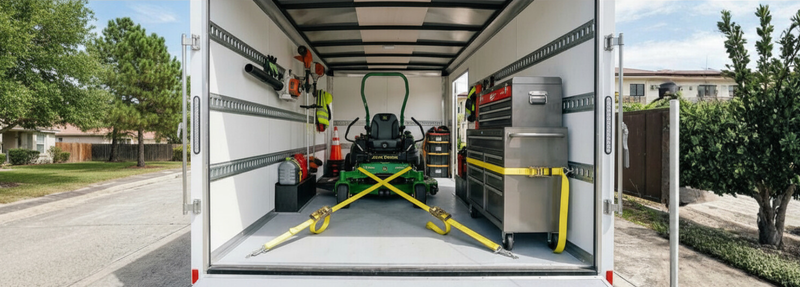
Once you know your weight distribution plan, start loading your heaviest items first. Place them as low as possible on the floor of the unit, and try to keep them centred from side to side.
Keeping heavy equipment low is important because it lowers the overall centre of gravity. A high centre of gravity makes any vehicle — including your tow vehicle and the unit behind it — more likely to tip during sharp turns or sudden manoeuvres.
Push your heavy equipment as close to the front wall as possible. When you brake suddenly, the cargo wants to keep moving forward. Items that are already against the front wall have nowhere to go, which reduces the stress on your tie-down straps and prevents cargo from smashing into each other.
For very heavy items like compact machinery or generators:
- Load them first, before anything else.
- Keep them flush against the front wall.
- Centre them between the left and right walls.
- Strap them down before adding anything around them.
Once your heaviest items are in place and secured, you can fill in around them with medium and lighter gear.
Use Tie-Down Points Properly
Your tie-down points are only as good as how you use them. Attaching a strap incorrectly — or to a weak anchor point — can cause a complete securing failure while you’re on the road.
Always attach your straps to rated anchor points. E-track systems and D-rings that are bolted to the frame of your unit are your safest options. Never wrap straps around light fixtures, wall panels, or other parts of the unit that aren’t designed to hold load weight.
When attaching straps, angle them so they pull down and inward on the cargo from multiple directions. This creates tension that resists both vertical bounce and horizontal sliding. For large or heavy items, use at least two straps — one on each side — to create balanced restraint. For longer pieces of equipment, follow the general rule of one tie-down for every 10 feet of cargo length, with a minimum of two straps regardless of size.
After strapping everything down, give the cargo a firm shake. If anything moves, tighten your straps or add more. Don’t leave for the road until nothing shifts.
Stack Cargo the Smart Way
Not all loads sit flat on the floor. Sometimes you need to stack items, and doing it safely takes a bit of thought.
The basic rule is simple: heavier items go on the bottom, lighter items go on top. Stacking a heavy piece of equipment on top of something fragile or unstable is a recipe for damaged gear and a shifted load.
Here are a few more tips for smart stacking:
- Make sure the bottom items are fully secured before stacking anything on top of them.
- Keep stacked loads as low as possible to avoid raising your centre of gravity.
- Use moving blankets or padding between items to prevent scratching and shifting.
- If stacked items are tall, add a strap over the top of the stack to prevent it from tipping sideways.
Avoid stacking items loosely or in ways that could collapse during braking. When in doubt, lay something flat on the floor instead of standing it upright.
Do a Safety Check Before You Hit the Road
Before you pull out of the driveway, take five minutes to do a full safety check. This is one of the easiest ways to catch a problem before it becomes a real issue.
Walk around your loaded unit and check:
- All straps are tight with no slack.
- Ratchet mechanisms are locked in place.
- Anchor points show no signs of bending or stress.
- The rear doors close and latch properly with no cargo pressing against them.
- Nothing is loose, sticking out, or shifting when you push on it.
After the first 10–15 kilometres on the road, it’s worth pulling over to check your straps again. Cargo tends to settle during the first stretch of a trip, and straps can loosen slightly as things shift into place. A quick re-tightening early on can prevent a bigger problem later.
On long hauls, check your tie-downs every few hours. Weather, road vibration, and temperature changes can all affect strap tension over time.
Securing Cargo in Your Region: Local Tips for Safety
When transporting cargo in our local region, it’s essential to consider how the climate impacts your load. For example, extreme temperature shifts common in certain seasons can cause straps to expand or contract, potentially loosening your tie-downs. Rain, snow, or ice can also add moisture to equipment, which might lead to slipping or corrosion over time. Always check weather updates and prepare for these elements with weather-resistant gear and proper maintenance.
Local building styles and common materials used here can also affect your hauling experience. Many regional structures and tools incorporate wood, steel, or concrete, all of which require proper protection during transit. For instance, securing wooden materials might demand padding to prevent dents or scratches, while steel equipment could need extra straps to handle its weight securely on rugged terrain. Understanding these characteristics helps ensure safe and efficient transport, especially during busy construction seasons.
Be mindful of regional regulations when securing cargo, as rules around tie-downs and load limits may differ compared to other areas. Failing to follow these guidelines can result in fines or, worse, unsafe conditions on the road. Additionally, seasonal challenges, such as increased road maintenance during the winter, can create hazards for drivers transporting heavy loads. Addressing common issues like these ensures compliance, safety, and efficiency while building trust with clients in our community.
Frequently Asked Questions
How many tie-down straps do I need for an enclosed trailer?
Use at least two straps for any single item, no matter the size. For longer cargo, add one strap for every 10 feet of length. Multiple straps at different angles give you the best protection against shifting.
Can I use bungee cords to secure equipment?
No. Bungee cords stretch and lose tension over time, making them unreliable for securing equipment during transport. Always use rated ratchet straps for anything that needs to stay in place.
What is E-track and why is it useful?
E-track is a slotted metal rail mounted to the walls or floor of a trailer. It creates flexible anchor points for straps at any position along the rail, making it much easier to secure loads of different shapes and sizes.
How do I know if my load is too heavy?
Check your trailer’s Gross Vehicle Weight Rating (GVWR). This is the maximum total weight it can safely carry, including the unit itself. Never exceed this limit. You can also check the axle rating to make sure the weight is distributed within safe limits.
What should I do if cargo shifts while I’m driving?
Pull over as soon as it’s safe to do so. Do not try to adjust moving cargo while driving. Once stopped, re-secure everything before continuing your trip.
Is there a legal requirement for securing loads in Ontario?
Yes. Ontario’s Highway Traffic Act requires all cargo to be properly secured before travelling on public roads. Unsecured loads can result in fines, and if loose cargo causes damage or injury, you may face additional liability.
Ready to Haul? McFarlane Trailers Has You Covered
Loading and securing your equipment properly doesn’t have to be difficult. By taking simple steps, you can make sure your haul is safe and worry-free. Remember to start with a plan for weight distribution, place heavier items at the bottom, and use anchor points that are rated for the load. Always double-check your setup to avoid any problems on the road. These small steps go a long way in protecting your equipment and others on the road.
At McFarlane Trailers, we make hauling easier for you, such as Enbeck, Pace, or Rocklyn. Based in New Hamburg, Ontario, we offer a wide range of enclosed trailers and accessories that fit your specific needs. Whether you’re moving small tools or heavy machinery, we’ve got the right solutions to help keep everything secure. Not sure what trailer or tie-down setup works best for you? Our friendly team is here to answer your questions and offer advice.
Whatever you’re hauling, we’re committed to making your experience simple and efficient. Reach out to McFarlane Trailers today to find the equipment that’s right for you. We’re here to support you with safe, reliable products every step of the way.